Global buyers are entering 2026 with higher storage costs, tighter labor markets, and less tolerance for slow inventory movement. Storage Efficiency now means more than fitting extra cartons into a building. It involves using vertical space, reducing travel distance, improving stock accuracy, and controlling energy consumption. MHI’s 2024 Annual Industry Report found that 44% of surveyed supply-chain professionals already used inventory and network optimization technologies. The figure could reach 83% within five years. This shift shows why warehouse decisions increasingly depend on measurable data, not attractive equipment alone.
Several solutions deserve close attention, including automated storage and retrieval systems, high-density mobile shelving, warehouse management software, and modular mezzanines. DHL’s Logistics Trend Radar highlights robotics, artificial intelligence, and computer vision as major logistics trends. These tools can identify empty locations, guide picking routes, and detect misplaced products. However, automation is not automatically efficient. A high-speed system may waste capital when order volume is seasonal or product dimensions change frequently. That matters for global buyers comparing suppliers across different labor, energy, and maintenance environments. Small details matter. A poorly positioned barcode scanner can add thousands of unnecessary steps each month. The World Bank’s Logistics Performance Index also shows substantial differences in infrastructure and logistics reliability between markets. Therefore, the best 2026 solution should combine verified throughput data, practical installation experience, lifecycle costs, and local service capability. This guide examines leading Storage Efficiency solutions with a realistic view of their benefits, limitations, and implementation risks. Perfect forecasting is impossible. Better measurement is achievable.
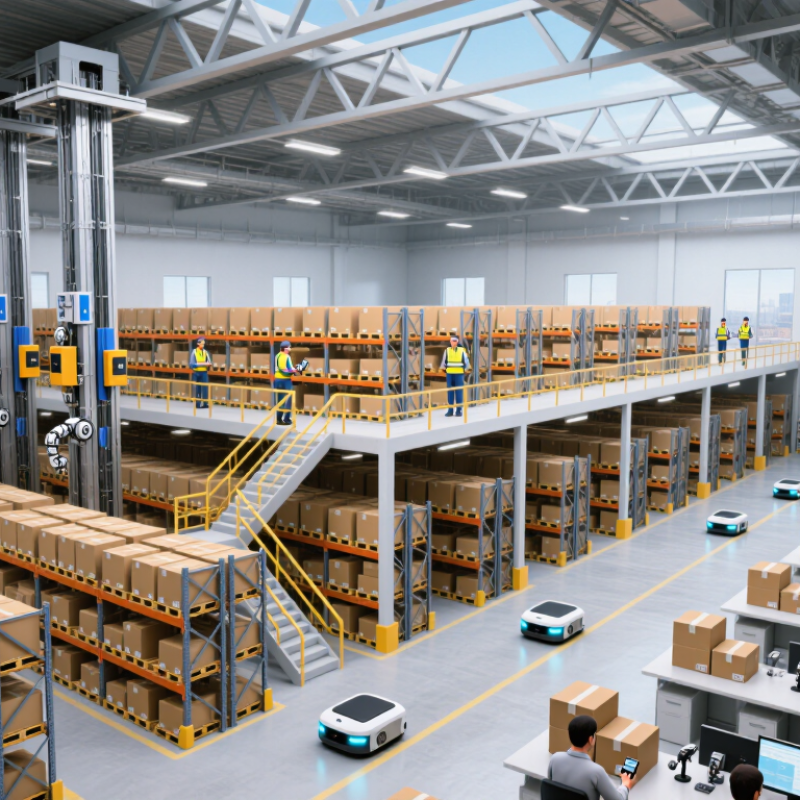
Storage efficiency in 2026 means more than fitting extra cartons into fewer square meters. For global buyers, it means reducing travel, handling, idle inventory, energy use, and retrieval errors. A compact warehouse can still perform poorly. Fast-moving goods placed behind slow stock create congestion and labor waste. I have seen projects overvalue cube utilization. That remains a costly mistake.
The MHI 2024 Annual Industry Report found that 55% of supply chain professionals expected to adopt robotics and automation within five years. This signals a practical shift toward measurable throughput, not technology for its own sake. Buyers should compare storage density with pick time, replenishment frequency, order accuracy, and maintenance access. A useful layout may include adjustable shelving, modular bins, barcode scanning, and separate zones for high-velocity items. Keep aisles clear. Protect emergency access.
Energy performance also deserves attention. The International Energy Agency reported that global energy-efficiency investment reached nearly 660 billion dollars in 2023. Warehouses can support that trend through efficient lighting, demand-based ventilation, insulated zones, and submetering. However, international comparisons are imperfect. Labor costs, building codes, climate, and shipment profiles change the result. Before approving a solution, buyers should test real SKU data for several weeks. Data quality is often weaker than expected. That should be measured, not quietly ignored.
Storage efficiency in 2026 means increasing usable capacity while reducing floor-space requirements, labor intensity, and energy consumption. The chart shows typical space-saving potential compared with conventional fixed shelving.
The values represent commonly reported industry ranges for warehouse storage systems and are intended as planning benchmarks. Actual results depend on building height, inventory profile, SKU variety, throughput, fire regulations, and local operating conditions.
Modern storage efficiency begins with reducing unnecessary data movement. The International Energy Agency reports that data centers used about 460 terawatt-hours globally in 2022. Demand could exceed 1,000 terawatt-hours by 2026. Efficient storage is now an energy strategy, not merely an IT upgrade.
Data deduplication and compression reduce duplicate files before they reach physical drives. Automated tiering then moves frequently accessed data to high-performance media. Older records can shift to lower-energy capacity systems. Erasure coding also improves resilience while using less overhead than traditional replication. According to the Storage Networking Industry Association, these methods support scalable architectures, but performance depends on workload patterns and recovery requirements. One configuration cannot fit every region.
Cooling and power controls matter too. The Uptime Institute’s 2024 Global Data Center Survey reported average power usage effectiveness near 1.6, showing that facility efficiency still has room to improve. Buyers should request measured PUE, write endurance, recovery-time data, and compression results from real workloads. Marketing estimates can look impressive. They can also mislead. A small storage cluster running at high utilization may outperform a larger system with poor data placement. Measure before scaling. Retrofits may also create compatibility problems, especially when older applications lack modern automation interfaces. Reviewing those limitations early produces more reliable purchasing decisions.
| Technology / Solution | Primary Efficiency Mechanism | Typical Capacity or Efficiency Impact | Best-Fit Workloads | Main Benefits | Key Trade-Offs | Technology Maturity |
|---|---|---|---|---|---|---|
| Data Deduplication | Removes duplicate data blocks and stores only unique blocks with metadata references. | Common effective reduction: 2:1 to 10:1; higher ratios are possible for highly repetitive datasets. | Virtual-machine images, databases with repeated backup sets, file repositories, and backup targets. | Reduces physical capacity, backup windows, and storage-related network traffic. | Results depend strongly on data uniqueness; indexing consumes CPU, memory, and metadata space. | Mature |
| Compression | Encodes data using fewer bits through lossless algorithms, often applied inline or during post-processing. | Typical reduction: approximately 1.5:1 to 3:1 for general enterprise data; text and logs may compress more. | Documents, databases, analytics data, logs, backups, and archival content. | Improves usable capacity and can lower storage, bandwidth, and energy requirements. | Compression and decompression add processing overhead; already compressed media gains little. | Mature |
| Erasure Coding | Splits data into fragments and adds parity fragments to provide fault tolerance with less overhead than full replication. | Common layouts such as 8+2 or 10+4 use roughly 25% to 40% parity overhead, compared with 100% for two-copy mirroring. | Object storage, large-scale archives, cloud platforms, and capacity-oriented distributed systems. | High durability with better raw-to-usable capacity efficiency than replication. | Encoding, reconstruction, and small-write operations can increase CPU, latency, and network load. | Mature |
| Thin Provisioning | Allocates physical capacity only when applications actually write data, rather than reserving the full logical volume. | Can defer or eliminate unused allocation; savings vary with application utilization and reclamation quality. | Virtualized environments, private clouds, test platforms, and dynamically growing applications. | Improves utilization, simplifies capacity planning, and supports rapid provisioning. | Requires monitoring, alerting, and capacity controls to prevent over-allocation. | Mature |
| Automated Data Tiering | Moves data between performance tiers according to access frequency, latency requirements, age, or policy. | Can reduce the amount of premium media required; actual savings depend on the hot-to-cold data ratio. | Mixed workloads, analytics repositories, content platforms, and large enterprise file systems. | Balances performance and cost while extending the useful life of existing capacity. | Poor policies can cause unnecessary data movement or unexpected access latency. | Mature |
| NVMe and NVMe over Fabrics | Uses a streamlined protocol designed for non-volatile memory, reducing command overhead and supporting parallel queues. | PCIe 4.0 provides up to 16 GT/s per lane and PCIe 5.0 up to 32 GT/s per lane; practical performance depends on hardware and workload. | High-performance databases, artificial-intelligence pipelines, virtualization, and real-time analytics. | High IOPS, low latency, efficient parallelism, and improved resource utilization. | Higher acquisition cost, network design complexity, and greater need for thermal management. | Mature and expanding |
| QLC NAND Flash | Stores four bits per NAND cell, increasing bit density and lowering cost per usable terabyte. | Higher density than TLC flash, with lower write endurance and sustained-write performance than higher-bit-per-cell alternatives. | Read-heavy repositories, content distribution, analytics lakes, backups, and secondary storage. | High capacity per device, lower storage footprint, and reduced power per stored terabyte in suitable workloads. | Write-intensive workloads may require over-provisioning, caching, or workload separation. | Mature for read-intensive use |
| Object Storage with Lifecycle Policies | Uses scalable object namespaces, metadata, and automated rules to transition infrequently accessed data to lower-cost tiers. | Can reduce active-tier consumption substantially when data naturally becomes less frequently accessed over time. | Unstructured data, media, backups, research datasets, logs, and long-term archives. | Scales horizontally, supports policy-based retention, and reduces manual storage administration. | Retrieval fees, access latency, metadata design, and application compatibility must be evaluated. | Mature |
| Storage-Class Memory and Persistent Memory | Places frequently accessed or latency-sensitive data closer to the processor while retaining persistence across power cycles. | Provides lower latency than conventional block storage in supported platforms; capacity and endurance vary by implementation. | In-memory databases, financial processing, metadata services, and high-performance computing. | Reduces I/O wait time and can improve compute utilization for latency-sensitive applications. | Higher cost per gigabyte, specialized software support, and a smaller capacity envelope. | Specialized / selective adoption |
| Software-Defined Storage | Pools storage resources across standardized servers and applies software-based policies for provisioning, protection, and placement. | Efficiency gains come from pooling, elastic allocation, automation, and improved utilization rather than a single fixed ratio. | Private clouds, edge environments, distributed applications, and heterogeneous infrastructure. | Improves flexibility, hardware utilization, scalability, and centralized management. | Requires strong network design, operational skills, and careful compatibility testing. | Mature |
| AI-Assisted Predictive Storage Management | Analyzes telemetry to forecast demand, detect anomalies, optimize placement, and recommend capacity actions. | Potentially improves utilization and reduces avoidable over-provisioning; results depend on data quality and automation scope. | Large multi-tier environments, cloud operations, distributed storage, and rapidly changing workloads. | Earlier fault detection, more accurate forecasting, and reduced manual administration. | Requires reliable telemetry, governance, explainable recommendations, and human oversight for high-impact changes. | Emerging to expanding |
For global buyers, compare storage by usable capacity, not advertised raw capacity. A 100-terabyte system may provide only 70 terabytes after redundancy, formatting, and reserved space. Ask suppliers to show usable capacity under identical protection settings. Then check expansion limits, rack density, power use, and cooling needs. Small details matter.
IDC’s Global DataSphere Forecast projects worldwide data creation and replication will reach 394 zettabytes by 2028. Capacity alone will not solve that pressure. Measure sustained throughput, input/output operations per second, and read-write latency. Use workload samples, not peak figures from brochures. A system claiming one millisecond latency may perform differently during backups or heavy compression. That shortcut often fails.
Reliability deserves equal weight. Uptime Institute’s 2024 Global Data Center Survey reported that 54% of respondents’ latest outages cost under 100,000 dollars, while 16% exceeded one million dollars. Compare redundancy, recovery time, firmware controls, and service coverage across regions. Request a live performance test with your own data pattern. It is less impressive, but more honest. Performance testing can still miss seasonal demand, operator mistakes, or future software changes. Leave expansion headroom, even when the initial purchase feels oversized.
Global storage buyers are prioritizing efficiency, but sustainability now includes energy, materials, and worker safety. The IEA reports that buildings consume about 30% of global final energy and produce roughly 26% of energy-related emissions. Efficient storage therefore needs more than compact shelving. It needs LED lighting, zoned heating, high-density layouts, and measured energy use. Motion sensors can reduce empty-aisle lighting. However, automation is not automatically sustainable. Its electricity source, maintenance burden, and replacement cycle require careful review.
Safety remains a purchasing condition, not a paperwork exercise. The International Labour Organization estimated 2.93 million work-related deaths globally in 2023, with many risks linked to routine operations. Buyers should request documented load ratings, inspection schedules, emergency routes, and training records. ISO 45001 can support a structured safety system, while ISO 14001 helps control environmental impacts. Local fire codes and building requirements still override general certificates. That detail is often missed.
Compliance also needs evidence across borders. Ask for material declarations, traceable test reports, and clear installation instructions in the operating language. A practical audit should inspect anchors, damaged beams, blocked exits, and battery-charging areas. Some efficiency projections look impressive on paper. Real facilities are messier, and human behavior changes the result. This is where buyers should remain skeptical.
Choosing a storage efficiency solution starts with the buyer’s operating reality, not a fashionable technology. A high-volume warehouse may need automated retrieval, while a small distributor may gain more from adjustable shelving and clear location labels. The 2024 CBRE Global Logistics Occupier Survey identifies labor availability, operating costs, and space constraints as major logistics concerns. Measure twice.
For facilities handling many product types, modular racking and barcode-based inventory control can improve access without demanding a full automation project. The 2024 MHI Annual Industry Report found that 55% of supply-chain professionals planned to increase investment in technology and innovation. Yet investment alone does not guarantee efficiency. Poor product classification can leave automated equipment searching through badly organized stock. That mistake is expensive.
Cold storage requires a different calculation. Insulation quality, door discipline, energy monitoring, and suitable shelving matter more than maximum storage density. The International Energy Agency reported that data centers consumed about 415 terawatt-hours globally in 2024, showing how energy-intensive storage infrastructure can become. Physical storage also needs energy-aware design. Buyers should compare usable capacity, maintenance access, safety requirements, and five-year operating costs. Early pilots are useful, but they can mislead when seasonal demand is ignored. A solution that works in a quiet month may fail during peak shipments. Industry benchmarks help, but local measurements remain more trustworthy.
Raw capacity can be misleading. A 100-terabyte system may offer only 70 terabytes after redundancy and formatting. Ask for usable figures under identical protection settings.
Check sustained throughput, input/output operations per second, and read-write latency. Use workload samples. Peak brochure figures may not reflect daily performance.
No. A one-millisecond claim may change during backups, compression, or heavy traffic. Test with your own data pattern. Test it live.
Compare redundancy, recovery time, firmware controls, and regional service coverage. Request outage records when possible. Reliability still has uncertainty.
Future data growth, seasonal demand, and software changes can exceed forecasts. Check expansion limits, rack density, power use, and cooling needs before purchase. Oversizing feels wasteful, but under-sizing hurts later.
Measure electricity use, lighting, heating, maintenance, and replacement cycles. Motion sensors may reduce empty-aisle lighting. Automation is not automatically sustainable.
Request documented load ratings, inspection schedules, emergency routes, and training records. Inspect anchors, damaged beams, blocked exits, and battery-charging areas. Paperwork alone is not enough.
Ask for material declarations, traceable test reports, and installation instructions in the operating language. Local fire and building rules still apply. Certificates do not replace local checks.
In 2026, Storage Efficiency is becoming a key priority for global buyers seeking to maximize capacity, control operating costs, and improve long-term resource management. Modern solutions combine optimized layouts, modular designs, intelligent monitoring, automation, and data-driven planning to make better use of available space while maintaining reliable access and workflow performance. Buyers should evaluate not only storage volume, but also retrieval speed, scalability, energy consumption, maintenance requirements, and compatibility with existing operations.
A complete comparison should also consider sustainability, user safety, durability, and compliance with applicable local and international standards. The most suitable solution will depend on the buyer’s industry, facility size, inventory characteristics, growth expectations, and budget. By balancing capacity, performance, environmental impact, and operational flexibility, organizations can select a storage approach that supports efficiency, resilience, and responsible expansion across different markets.

Ebil Metal