For global buyers, warehouse safety is more than helmets, warning signs, and written procedures. It affects product quality, delivery reliability, worker wellbeing, and supplier trust. A crowded aisle, a damaged pallet, or a poorly marked loading zone can create serious delays within minutes. Small details matter.
This guide presents 10 practical Warehouse Safety tips for evaluating and improving storage operations. It focuses on visible risks, including forklift movement, rack stability, fire access, manual handling, emergency routes, and staff training. Buyers can use these points during supplier visits, audits, and procurement discussions. Photos, inspection records, and direct conversations with workers often reveal more than polished presentations.
Safety is a daily habit.
Safety scientist Erik Hollnagel states, “Safety is the ability to succeed under varying conditions.” His view is especially relevant to international warehouses, where layouts, equipment, languages, and working practices may differ. A reliable facility should perform safely during busy receiving periods, seasonal demand, equipment changes, and unexpected disruptions. Perfect conditions are rare. That is worth admitting.
Some safety checks may feel repetitive or incomplete. They can still prevent expensive mistakes. A buyer should ask practical questions, inspect real working areas, and avoid relying only on certificates. Strong Warehouse Safety systems combine documented procedures with trained people and well-maintained equipment. They also improve over time through reporting, review, and honest correction. This introduction sets the foundation for the ten essential tips that follow.
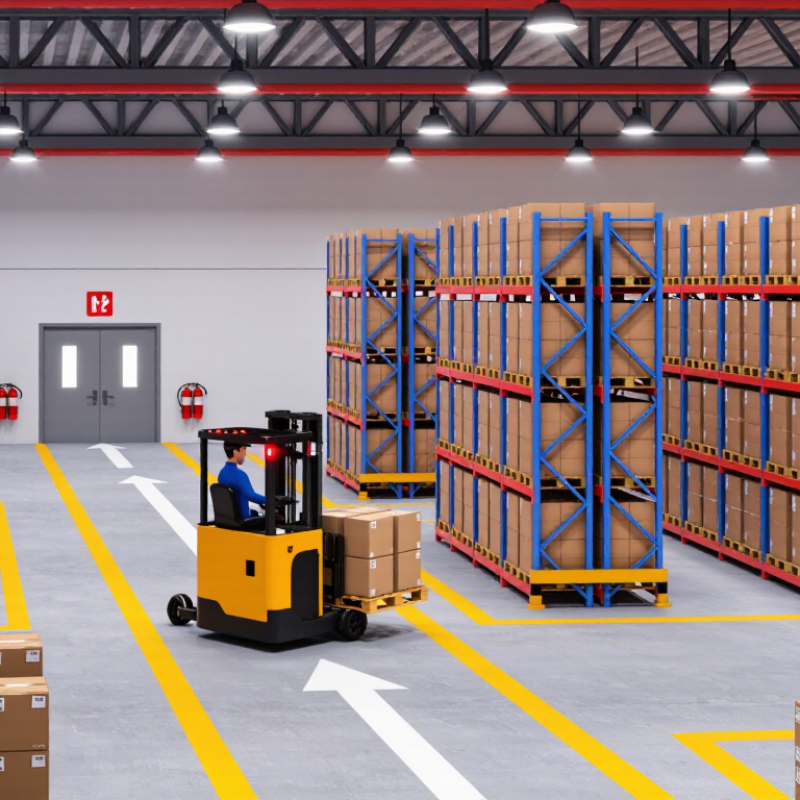
Global warehouse safety depends on consistent standards, not attractive paperwork. Buyers should request risk assessments, inspection records, training logs, and emergency procedures. ISO 45001 offers a useful framework for occupational safety management. However, local regulations still control daily operations. Check requirements for fire protection, worker protection, lifting equipment, and electrical systems before approval.
Keep pedestrian lanes clearly marked and separate them from forklift routes. Inspect forklifts, pallet jacks, and loading docks before every shift. Store goods within rack weight limits and secure unstable cartons. Maintain clear exits and test emergency lighting regularly. Provide task-specific protective equipment, including safety footwear and eye protection. Train workers in languages they understand. Display simple signs near hazards. Control dust, noise, heat, and poor ventilation. Keep chemicals labeled and stored in suitable areas. Record near misses, not only serious injuries.
Small details reveal real performance. During a site visit, check whether aisle markings remain visible beneath dust and tire tracks. Watch how workers move during busy receiving hours. A perfect audit file can hide unsafe shortcuts. I have found that rushed loading periods often expose weak supervision. Buyers should discuss corrective actions and set realistic deadlines. Safety improves through repeated observation, honest reporting, and verified follow-up. Photos help, but direct conversations often reveal more. Good standards must work on ordinary days, not only during inspections.
A safety-focused warehouse should prioritize powered industrial truck controls, pedestrian separation, operator training, and routine inspections. The chart uses OSHA’s widely cited annual forklift injury estimates as a practical risk baseline for supplier evaluations.
Data source: U.S. Occupational Safety and Health Administration (OSHA), “Powered Industrial Trucks.” OSHA estimates approximately 85 forklift-related fatalities, 34,900 serious injuries, and 61,800 non-serious injuries annually. Requirements may vary by country; buyers should verify applicable local regulations and ISO 45001-based systems.
For global buyers, warehouse safety begins with the facility layout, not a warning sign. Review receiving, storage, picking, and dispatch routes on the floor. Pedestrian lanes should remain separate from vehicle paths, with clear crossings and visible barriers. Keep emergency exits open and easy to reach. Check lighting beneath racks, around loading docks, and inside cold or enclosed areas. Small blind spots can hide serious risks.
Equipment deserves a hands-on review. Inspect racks for bent frames, loose anchors, and overloaded shelves. Ask for maintenance records for forklifts, conveyors, lifting devices, and dock equipment. Operators should receive documented training and use suitable protective equipment. Test whether controls are readable and reachable. Do not accept a clean inspection room as proof of safe operations. A short walk during a busy shift often reveals more.
Material handling practices show how safety works under pressure. Watch workers move cartons, pallets, and irregular loads. Loads should stay stable, within capacity limits, and clear of walkways. Confirm that damaged pallets are removed instead of reused. Review near-miss reports, not only injury records. Some facilities record little because workers hesitate to report problems. That weakness deserves attention. Buyers should compare written procedures with actual behavior and ask workers where delays or shortcuts occur. No inspection is perfect. A second visit may change the assessment.
| No. | Safety Area | What to Evaluate | Practical Acceptance Criteria | Recommended Verification | Primary Risk Controlled |
|---|---|---|---|---|---|
| 1 | Facility Layout and Traffic Flow | Check whether pedestrian routes, forklift routes, storage zones, loading docks, and emergency exits are clearly separated and logically connected. | Routes should be marked, adequately illuminated, kept free of stored goods, and designed to prevent unnecessary crossing between pedestrians and powered equipment. | Review the current floor plan and conduct an on-site walk-through during normal operating hours. Confirm that markings remain visible and unobstructed. | Vehicle–pedestrian collision, congestion, and blocked evacuation paths |
| 2 | Aisle Width and Clearances | Compare aisle dimensions with the turning radius, load size, mast height, and operating pattern of the material-handling equipment in use. | Aisles must provide sufficient clearance for the selected equipment and load. Do not rely on a generic width; verify the equipment manufacturer’s operating requirement and local regulations. | Measure representative aisles, turning areas, rack-end clearances, and overhead clearances. Test the largest routine load under controlled conditions. | Contact with racks, dropped loads, and restricted emergency access |
| 3 | Racking and Load Stability | Inspect rack frames, beams, bracing, anchors, safety pins, backstops, pallet condition, and load placement. | Rack components should be undamaged, anchored where required, fitted with locking devices, and used within the posted rated capacity. Loads should be stable, centered, and compatible with the pallet design. | Review rack capacity signs, installation records, inspection logs, and corrective-action records. Separate damaged components from service until assessed. | Rack collapse, falling objects, and struck-by injuries |
| 4 | Forklift and Powered Equipment Control | Assess operator authorization, pre-use inspections, maintenance, visibility, attachments, warning systems, and interaction with pedestrians. | Only trained and authorized operators should use powered industrial trucks. Equipment should receive documented pre-shift checks, have functional brakes and warning devices, and never exceed its rated capacity. | Sample operator licenses or training records, daily inspection forms, maintenance history, and incident reports. Observe reversing, parking, and load-handling practices. | Crushing, collisions, overturns, and falling loads |
| 5 | Loading Dock Safety | Check dock plates, vehicle restraints, wheel chocks, dock edges, trailer floors, dock doors, lighting, and communication procedures. | Trucks and trailers should be secured before entry. Dock plates must be suitable for the expected load, properly positioned, and capable of supporting the equipment and cargo being transferred. | Observe at least one complete loading or unloading cycle. Inspect dock equipment, restraint records, trailer condition checks, and dock-edge protection. | Falls from dock edges, trailer movement, and equipment overturns |
| 6 | Manual Handling and Ergonomics | Review lifting frequency, package weight and shape, reach distance, twisting, carrying distance, and availability of mechanical aids. | Heavy, bulky, unstable, or frequently handled items should have suitable carts, conveyors, lift tables, or other mechanical assistance. Workstations should minimize bending, overreaching, and torso twisting. | Observe representative tasks, interview workers, review injury and near-miss data, and verify that lifting aids are available, maintained, and actually used. | Strains, sprains, repetitive-motion injuries, and dropped products |
| 7 | Housekeeping and Spill Control | Inspect floors, aisles, workstations, waste areas, packaging materials, leaks, spills, and temporary storage practices. | Floors should be clean, dry, and free of loose packaging, protruding materials, and trip hazards. Spill kits should be available near credible spill sources and replenished after use. | Conduct a shift-start and peak-activity inspection. Review housekeeping checklists, spill-response records, and the average time taken to remove reported hazards. | Slips, trips, falls, blocked routes, and product damage |
| 8 | Emergency Preparedness and Fire Protection | Verify emergency exits, exit signs, alarms, fire equipment, evacuation maps, assembly points, first-aid supplies, and emergency lighting. | Exits and access to emergency equipment must remain unobstructed and visibly marked. Emergency drills, inspections, and equipment maintenance should be documented at legally required intervals. | Walk every evacuation route, review drill results and corrective actions, and confirm inspection tags or service records for applicable emergency equipment. | Delayed evacuation, fire escalation, and inadequate emergency response |
| 9 | Battery Charging and Hazardous Materials | Assess battery-charging areas, ventilation, ignition control, spill response, chemical labeling, safety data sheets, and segregation of incompatible materials. | Charging areas should be designated, ventilated as required, protected from ignition sources, and equipped with suitable emergency controls. Chemicals must be labeled and stored according to their hazards. | Inspect the charging station and chemical storage area. Review safety data sheets, worker training, ventilation checks, spill-kit contents, and waste-disposal records. | Fire, explosion, chemical exposure, and environmental release |
| 10 | Training, Monitoring, and Continuous Improvement | Evaluate induction training, task-specific instruction, language accessibility, refresher training, near-miss reporting, audits, and corrective-action closure. | Workers should receive training before performing assigned tasks and whenever equipment, processes, or risks change. Corrective actions should have an owner, due date, priority, and documented closure. | Sample training records across shifts and job roles. Compare audit findings, near misses, recordable incidents, overdue actions, and repeat findings over time. | Unsafe work practices, repeated incidents, and weak safety accountability |
Warehouse safety begins with proof, not promises.
Global buyers should request current training records before approving a supplier. Records should show worker names, dates, topics, and trainer qualifications. A signature alone is weak evidence. Ask how new workers learn before entering loading zones.
Walk through the facility when possible, or request recent video evidence. Watch whether workers use helmets, eye protection, gloves, reflective clothing, and safety footwear correctly. Protective gear must fit the task and the person.
Damaged equipment should be removed immediately. Small details matter. A loose glove can catch on moving equipment. A fogged face shield can obstruct vision.
Emergency procedures need practical testing. Ask for marked exits, clear evacuation routes, first-aid supplies, fire equipment, and visible emergency contacts. Confirm that workers know who leads an evacuation and where they assemble.
A drill record is useful, but observe the drill if possible. Did alarms reach every area? Did workers stop safely? Did supervisors check isolated rooms?
We once treated a posted procedure as sufficient evidence, but the real weakness was poor worker awareness. Review corrective actions, not just completed forms. Even strong systems need honest questioning after every near miss.
Warehouse safety matters when buyers cannot inspect every shipment in person. A reliable warehouse should record temperature and humidity daily, especially for sensitive goods. Keep cartons on clean pallets, raised above the floor and away from leaking pipes. Clear aisles reduce trips and make emergency access easier. During a site visit, check for damaged ceilings, blocked exits, and unstable stacking.
Tip: Ask for recent storage records, not verbal assurances. A simple humidity log can reveal repeated overnight problems. I once saw cartons stored beside an open loading door, where rain and dust entered during unloading. The goods looked fine outside, but inner packaging had softened. Conditions can change quickly.
Product security needs visible controls. Inspect seals, locked cages, visitor logs, and camera coverage near loading areas. Workers should scan each pallet when it arrives, moves, and leaves. Inventory software helps, but physical cycle counts still matter. Match labels with purchase orders, quantities, batch details, and dispatch records. Separate damaged or unverified goods in a clearly marked area.
Tip: Request photos of pallet labels before shipment. Compare them with the packing list. Small mismatches become expensive delays. A monthly count may sound sufficient, yet fast-moving stock often needs weekly checks. Even experienced teams miss occasional scans, so review exceptions instead of assuming the system is perfect.
A safe warehouse begins with evidence, not promises. Ask suppliers for the last three years of incident logs, inspection records, training certificates, and corrective-action reports. Verify dates, signatures, and repeated findings.
Walk the facility during receiving, picking, and loading. Check clear aisles, visible emergency exits, guarded machinery, stable pallets, and separated pedestrian routes.
U.S. OSHA estimates that forklifts cause about 85 deaths and 34,900 serious injuries annually.
Review operator licenses, maintenance schedules, battery charging controls, and speed rules.
Test whether workers can explain evacuation procedures. Paper compliance can fail on a busy afternoon.
Score suppliers monthly using near-miss reporting, injury rates, overdue actions, training completion, and delivery damage. Require documented root-cause analysis after every serious event. Compare performance across sites, shifts, and subcontractors.
Still, one audit cannot prove daily discipline. I have seen excellent records beside poorly marked walkways. Leave room for doubt, repeat inspections, and require dated photographic evidence before approving a supplier.
Request risk assessments, inspection records, training logs, and emergency procedures. Check dates, worker names, topics, and trainer qualifications. A signature alone proves little.
Mark pedestrian lanes clearly and separate them from forklift routes. Keep crossings visible and unobstructed. Observe movement during busy receiving hours.
Inspect forklifts, pallet jacks, loading docks, racks, and lifting equipment. Complete checks before every shift. Record defects and remove unsafe equipment quickly.
Watch workers wearing task-specific footwear, gloves, eye protection, helmets, and reflective clothing. Check fit and condition. A loose glove can catch on equipment.
Confirm clear exits, working emergency lighting, first-aid supplies, fire equipment, and visible contact details. Ask where workers assemble after evacuation. Test the process.
Records should include names, dates, subjects, and trainer qualifications. Ask how new workers learn before entering loading zones. Use languages workers understand.
Inspect aisle markings under dust and tire tracks. Watch supervision during rushed loading periods. Speak directly with workers. Files can look perfect.
Label chemicals and store them in suitable areas. Control dust, noise, heat, and poor ventilation. Keep exits clear. Small weaknesses can still cause harm.
Near misses reveal risks before serious injuries occur. Review corrective actions and deadlines. Do not mark forms complete without checking actual improvement.
No. Workers must know alarms, leaders, routes, and assembly points. Observe a drill when possible. We once trusted paperwork too quickly.
Effective Warehouse Safety is essential for global buyers seeking reliable suppliers and consistent product quality. A thorough evaluation should begin with the facility’s safety standards, layout, equipment condition, and material-handling methods. Buyers should confirm that storage areas, loading zones, walkways, and machinery are arranged to reduce accidents, improve efficiency, and protect goods throughout daily operations.
Attention should also be given to worker training, protective equipment, emergency response procedures, and regular safety inspections. Proper storage conditions, access controls, product security, and accurate inventory systems help prevent damage, loss, and operational confusion. Finally, buyers should review compliance records, risk assessments, corrective-action reports, and supplier performance history. By examining these areas systematically, global buyers can identify potential risks, encourage responsible warehouse management, and build stronger, more dependable supply-chain partnerships.

Ebil Metal