Choosing Compact Shelving in 2026 requires more than comparing prices or counting shelves. Global buyers must examine storage density, workplace safety, installation conditions, and long-term maintenance. A system that performs well in Rotterdam may struggle in a humid warehouse near Singapore. Local floor loading, ceiling height, aisle access, and fire-safety requirements can change the final design.
According to storage-systems consultant David R. Kincaid, “The best compact system saves space without making daily work harder.” This principle deserves attention. Compact Shelving should improve retrieval speed, not create a cramped maze. Buyers should request load ratings, movement-cycle tests, corrosion protection details, and clear warranty terms. Ask for project photographs. Better still, speak with existing users.
Manual, mobile, and electrically assisted systems each suit different operating realities. Manual units may fit smaller archives and controlled inventory rooms. Electrically assisted models can support heavier collections and frequent access. However, controls, sensors, emergency stops, and spare parts require careful review. A low purchase price may hide expensive service delays.
This guide explores how international buyers can compare suppliers, specifications, certifications, and total ownership costs. It also considers packaging, shipping damage, commissioning support, and staff training. Some recommendations may not fit every market. That is intentional. Storage decisions deserve questioning. Measure twice. Test real workflows. Leave room for the unexpected.
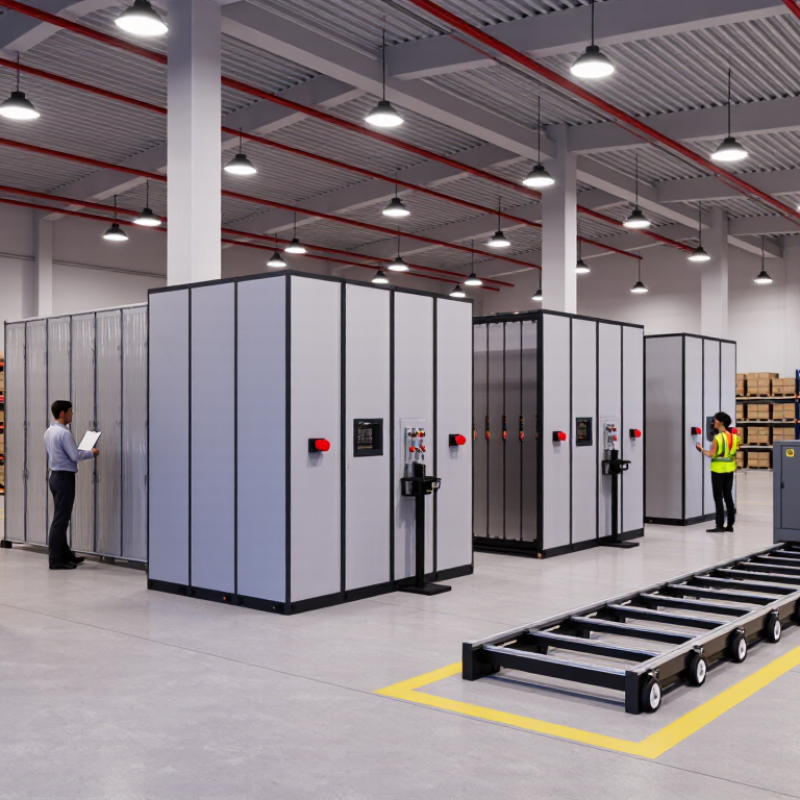
Compact shelving in 2026 means more than saving floor space. For global buyers, it means balancing capacity, access, safety, and local operating conditions.
A compact system may use movable carriages, adjustable shelves, or narrow aisles.
The right choice depends on the stored items, room dimensions, handling methods, and daily access frequency.
In practical sourcing work, I have seen buyers focus too heavily on maximum storage volume. That choice can create slow picking, difficult maintenance, and uncomfortable working conditions.
Check metric dimensions, verified load ratings, aisle clearance, corrosion protection, and installation requirements. Request drawings, test records, spare-part details, and clear packaging information. These documents make supplier comparisons more reliable across countries.
Tips:
Measure the actual room, including columns, doors, lighting, and uneven flooring.
Calculate peak inventory, not only today’s stock.
Ask whether shelves can be reconfigured later.
Confirm who installs and services the system locally.
A cheaper unit may become expensive after freight, delays, or replacement parts.
Avoid assuming every warehouse needs automation.
Sometimes simple manual shelving performs better.
I still think compact design is frequently judged by appearance, while workflow deserves more attention.
How to Choose Compact Shelving for Global Buyers in 2026?
How to Measure Space and Define Shelving Requirements
Accurate measurement is the foundation of compact shelving selection. Measure wall-to-wall width, floor-to-ceiling height, and usable depth. Record these figures in millimetres, then convert them for overseas suppliers when needed. Do not measure around furniture or temporary storage. Empty the area first.
Check doors, columns, skirting boards, radiators, sprinklers, and electrical panels. These details often reduce usable space. Leave enough clearance for doors to open safely and for people to move comfortably. A narrow aisle may save floor space, but it can slow daily access. That trade-off matters.
Measure twice. Sketch the room.
Next, define what the shelving must hold. List carton sizes, item weights, access frequency, and expected stock growth. Heavy cartons need stronger shelves and stable frames. Small parts may require more shelf levels, while bulky products need wider openings. Consider whether workers will pick items by hand or use equipment.
I have seen projects fail because buyers measured empty walls but ignored ceiling beams. I have also underestimated future inventory. That mistake is easy to repeat. Add a realistic growth allowance, but avoid filling every available centimetre. Leave room for installation, maintenance, ventilation, and safe handling.
Prepare clear photos, a simple floor plan, and confirmed measurements. Ask suppliers to review these details before production. Requirements should also reflect local building conditions, delivery access, and applicable safety standards. Good planning reduces revisions, shipping problems, and expensive site adjustments.
How to Choose Compact Shelving for Global Buyers in 2026?
Compare compact shelving by access, load, material, and operating conditions. Static boltless shelving suits light cartons and frequent manual picking. Mobile shelving uses rails and closes aisles, increasing storage density but requiring level floors and careful safety controls. High-density systems can save space, yet slower access may frustrate teams handling urgent orders.
Material selection should match the environment. Powder-coated steel works well in dry warehouses. Galvanized steel better resists humidity and temperature changes. Stainless steel supports clean, corrosion-sensitive areas, but its higher cost needs justification. Check load ratings, shelf deflection, anchoring, and replacement-part availability. Do not trust appearance alone. A thick-looking frame can still perform poorly under uneven loads.
MHI’s 2024 Annual Industry Report found that 55% of surveyed supply-chain organizations used cloud computing. This supports shelving with barcode, sensor, or inventory-system integration when accuracy matters. Still, automation is not always the best choice. A manual mobile unit may outperform a powered system in a small facility with limited maintenance skills. My own buying checklists sometimes overvalue maximum capacity. That can be a mistake. Measure aisle width, picker reach, carton dimensions, floor tolerance, and local service coverage before comparing prices. Include installation training and inspection records in the quotation, not as an afterthought.
A practical comparison of common compact-storage configurations for archives, offices, warehouses, libraries, healthcare facilities, and industrial applications.
| Compact Shelving Type | How It Operates | Typical Operating Aisle | Indicative Space Saving vs. Static Rows | Typical Shelf Load Range | Recommended Materials | Key Features to Compare | Best-Fit Applications | Main Considerations |
|---|---|---|---|---|---|---|---|---|
| Static Adjustable Shelving | Fixed upright frames create permanent aisles. Shelf heights can normally be adjusted without moving the complete unit. | 900–1,200 mm | Baseline | 50–250 kg per shelf, depending on shelf depth, span, and reinforcement | Powder-coated steel uprights and shelves; galvanized steel may be preferred in humid areas | Tool-free shelf adjustment, shelf stiffeners, back bracing, floor anchoring, divider panels, label holders | General office storage, retail back rooms, light industrial parts, and small archives | Requires more floor area because every row needs a usable aisle; simple installation and low operating complexity |
| Manual Mobile Shelving | Shelving units move on floor tracks by turning a hand wheel or operating a mechanical handle, opening one aisle at a time. | 750–1,000 mm when open | 30–60% potential floor-space reduction | 100–300 kg per shelf, subject to the track, carriage, and frame design | Powder-coated steel frames, formed steel shelves, steel carriages, and corrosion-resistant track components | Mechanical drive ratio, anti-tip interlock, end-of-run stops, accessibility, ergonomic handle height, and floor load | Records, libraries, museums, offices, and medium-weight inventory | Requires a reasonably level floor and careful assessment of rolling resistance, user access, and emergency egress |
| Mechanical-Assist Mobile Shelving | A hand wheel or lever uses a geared mechanism to reduce the force needed to move loaded shelving. | 750–1,000 mm when open | 40–70% potential floor-space reduction | 150–400 kg per shelf, depending on carriage capacity and shelf construction | Heavy-gauge powder-coated steel, reinforced carriages, machined or formed steel drive components | Low-effort operation, overload protection, anti-tip system, aisle locking, manual override, and service access | Dense archives, healthcare records, libraries, and frequently accessed storage areas | Higher purchase cost than static shelving; regular inspection of drive, track, and safety components is advisable |
| Powered Mobile Shelving | Electric motors move shelving carriages along tracks through push-button, touch-panel, or controlled-access interfaces. | 750–1,200 mm when open | 50–80% potential floor-space reduction | 200–500 kg per shelf, subject to the engineered system and load distribution | Powder-coated or galvanized steel frames, steel carriages, industrial motors, sensors, and protected electrical components | Variable-speed control, presence sensors, emergency stop, obstruction detection, access control, battery backup, and manual release | High-density archives, secure records, museums, laboratories, and large inventory rooms | Needs electrical planning, commissioning, periodic maintenance, and compatibility with local voltage and safety requirements |
| Mobile Pallet Racking | Full pallet-racking rows travel on powered or mechanically driven bases, allowing one access aisle to serve multiple rows. | 2,700–3,500 mm for common forklift access, subject to equipment and site layout | 30–60% potential storage-capacity increase within the same footprint | 500–2,000+ kg per pallet position, subject to beam, frame, floor, and anchoring design | Structural steel frames, roll-formed or hot-rolled beams, reinforced mobile bases, and impact protection | Forklift compatibility, rail design, seismic requirements, load signage, rack protection, emergency access, and fire-system coordination | Warehouses storing palletized goods where land or building space is limited | Requires engineered design, floor-capacity verification, operating procedures, and coordination with fire and building codes |
| High-Density Cantilever or Long-Load Mobile Storage | Mobile bases support cantilever arms or long-span supports for items that cannot be stored efficiently on standard shelves. | 900–1,500 mm when open, depending on load-handling method | 20–50% potential floor-space reduction | Load-specific; commonly 100–500 kg per arm level or support level | Structural steel columns, adjustable arms, reinforced bases, and protective powder-coated finishes | Arm spacing, load-centre limits, anti-tip protection, end stops, guide rails, and manual or powered movement | Carpet rolls, timber, pipes, profiles, panels, textiles, and other long or irregular products | Load balance is critical; products should be restrained where they could roll, slide, or overhang |
Safety should be checked before price, finish, or delivery speed. Ask for load ratings, deflection limits, anchoring details, and anti-tip protection. For powered mobile shelving, request emergency-stop tests, obstacle sensors, and manual override procedures. Applicable references may include EN 15635, ANSI MH16.1, ISO 12100, and local electrical requirements. Standards vary by location. Do not treat one certificate as universal approval.
The International Labour Organization reported 2.93 million work-related deaths and 395 million non-fatal injuries annually in its 2023 estimates. A falling shelf can create serious exposure. Check whether the supplier provides installation drawings, inspection schedules, and operator training. Inspect welds, rollers, tracks, locking parts, and corrosion protection on a physical sample. A spreadsheet is not enough.
The U.S. Bureau of Labor Statistics recorded 5,283 fatal occupational injuries in 2023, reinforcing the value of documented risk controls.
Supplier reliability also needs evidence. Review factory audit records, batch traceability, test reports, spare-parts availability, and corrective-action history. Ask for references from buyers with similar loads and climates.
Delivery promises can look convincing. I would still verify production capacity, packaging photographs, and inspection checkpoints before payment.
Perfect procurement checklists do not exist. Rechecking critical details is worthwhile.
Price should begin with landed cost, not the factory quotation. Compare steel grade, load rating, carriage system, packaging, spare parts, duties, insurance, and destination delivery.
The World Trade Organization expects merchandise trade volume to grow 2.6% in 2024, after declining 1.2% in 2023. That swing shows why shipping assumptions can age quickly.
Request two freight scenarios: standard ocean service and a delayed-arrival case. Ask for carton dimensions and total cubic volume. Shelving priced cheaply can become expensive when unused air fills the container.
Installation deserves equal attention. A compact system may require floor checks, anchoring, leveling, electrical work, and operator training.
The World Bank’s Logistics Performance Index 2023 assesses customs, infrastructure, international shipments, logistics competence, tracking, and timeliness.
Use those dimensions when comparing delivery countries. Require a bilingual installation guide, numbered components, and remote commissioning support. A local installer should confirm floor loading before purchase. My own cost sheets sometimes underestimate site preparation. That mistake is common.
Long-term value depends on movement frequency, repair access, and adaptability. The International Energy Agency reports that industrial energy efficiency remains a major cost opportunity, so efficient motors and standby settings deserve attention.
Request energy data under normal use, not only laboratory conditions.
Check warranty exclusions, replacement lead times, corrosion protection, and software compatibility. A five-year total-cost model is more honest than a low opening price. Leave room for doubt. Forecasts are never perfect.
It means balancing storage capacity, access speed, safety, and local conditions. Movable carriages, adjustable shelves, or narrow aisles may be used. More capacity is not always better. Slow picking can reduce its value.
Measure wall width, ceiling height, and usable depth in millimetres. Empty the room before measuring. Check doors, columns, beams, radiators, sprinklers, and electrical panels. Measure twice. Sketch the room.
Aisle width should match daily access and handling methods. Narrow aisles save floor space but may slow workers. Hand picking needs comfortable movement. Equipment may require additional clearance. I sometimes underestimate this trade-off.
Send confirmed measurements, floor plans, photos, and ceiling details. Include carton sizes, item weights, access frequency, and stock growth. Mention uneven flooring and delivery access. Clear drawings reduce production changes.
Compare total landed cost, not only the factory quotation. Include freight, packaging, duties, insurance, installation, and spare parts. Request carton dimensions and total cubic volume. Cheap units may contain expensive unused air.
Confirm floor loading, anchoring, leveling, and electrical requirements. Ask for numbered components and a bilingual installation guide. Confirm who provides local installation and service. Remote commissioning support can reduce site confusion. Site preparation is easy to underestimate.
Manual shelving may suit low movement frequency and simple storage needs. Automation can add complexity, training, maintenance, and energy costs. Review picking frequency before choosing equipment. Do not automate for appearance alone.
Build a five-year cost model covering repairs, energy, parts, and adaptability. Ask for normal-use energy data, not only laboratory figures. Check warranty exclusions and replacement lead times. Confirm shelves can be reconfigured later. Forecasts remain imperfect. Leave some doubt.
Choosing Compact Shelving in 2026 requires global buyers to balance space efficiency, durability, safety, and total cost. Start by measuring the available area, including ceiling height, aisle width, floor loading capacity, and access points. Then define the required storage volume, load capacity, mobility, adjustment options, and intended environment. Compare shelving types according to their structure, materials, corrosion resistance, ease of assembly, and useful features such as locking systems, modular components, and adjustable shelves.
Before purchasing, verify product quality, safety documentation, manufacturing consistency, and the supplier’s communication, inspection, and after-sales capabilities. A reliable decision should also consider the full landed cost, including unit pricing, packaging, shipping, customs procedures, installation, maintenance, and replacement parts. Buyers should evaluate delivery times, installation requirements, warranty terms, and expected service life rather than focusing only on the initial price. By reviewing these factors together, international customers can select a practical, secure, and adaptable shelving solution that delivers strong long-term value.

Ebil Metal