Choosing the right High-density Storage solution in 2026 requires more than comparing shelf capacity. It demands a practical review of inventory, floor space, labor, safety, and future growth. A warehouse may appear full, yet poor slotting can leave valuable cubic space unused. Small details matter, including aisle width, pallet dimensions, ceiling height, and retrieval frequency.
This guide examines proven options such as mobile racks, automated storage and retrieval systems, vertical lift modules, and high-density pallet systems. Each solution offers different benefits. Some reduce travel time. Others increase usable capacity. The best choice depends on measurable operating conditions, not impressive product claims. We will consider installation requirements, maintenance access, software compatibility, energy use, and employee training. Real performance should be tested with representative loads and daily workflows.
There is no universal answer. That is easy to forget. A compact automated system may improve throughput in one facility but create delays in another. Budget forecasts can also miss integration costs, service contracts, or building modifications. This article encourages careful comparison through site measurements, supplier documentation, pilot testing, and lifecycle calculations. Recommendations should come from verified data and experienced professionals, while still allowing room for uncertainty. A well-designed solution should support safer movement, clearer inventory control, and dependable access during busy periods. It should also remain adaptable when product sizes, order volumes, or business priorities change.
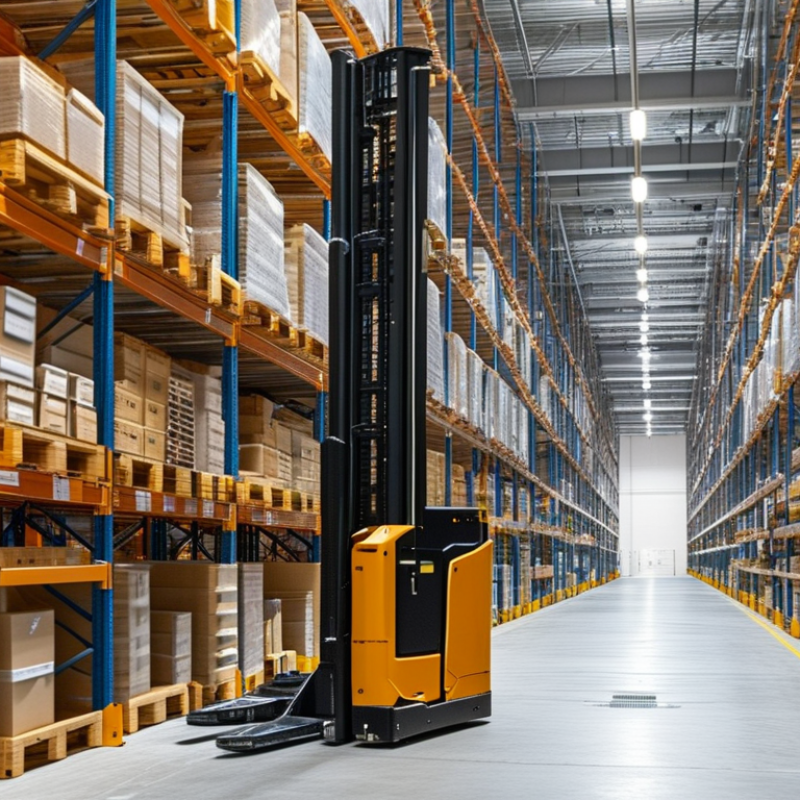
High-density storage means placing more inventory within the same floor area without blocking access, safety, or product flow. It may use taller racking, narrower aisles, mobile shelving, or automated retrieval equipment. The goal is not maximum height. It is usable capacity.
The core advantage is better space efficiency. A warehouse can store more pallets or cartons while postponing costly expansion. This matters when industrial property remains expensive and available space is limited. MHI’s 2024 Annual Industry Report found that 55% of supply chain leaders planned to increase innovation investment. Zebra’s 2024 Global Warehousing Study also reported that 73% of warehouse decision-makers expected to increase automation use by 2029.
Density can improve labor performance, too. Shorter travel paths reduce walking between storage and picking areas. Automated systems may also support accurate location control and faster retrieval. Yet density alone does not guarantee efficiency. A tightly packed layout can slow replenishment when products have different turnover rates. It can also create awkward access during peak demand. That is the part many proposals understate. Measure cube utilization, throughput, retrieval time, and emergency access together. A practical design should leave room for maintenance and human error. The definition is useful, but imperfect.
| Storage Solution | Definition | Typical Storage Density | Space Utilization | Access Profile | Best-Fit Applications | Core Advantages | Main Constraints |
|---|---|---|---|---|---|---|---|
| Selective Pallet Racking | Fixed pallet rack with direct access to every pallet position. | 1 pallet position per location; commonly 2–5 levels high, depending on building height and equipment. | Moderate; significant aisle area is required for forklift travel. | Direct access to 100% of stored pallets. | Warehouses with many stock-keeping units and frequent pallet picking. | Simple layout, high selectivity, easy inventory visibility, and flexible SKU management. | Lower density than compact systems because of wide operating aisles. |
| Double-Deep Pallet Racking | Two pallet positions are placed one behind the other in each rack bay. | Approximately twice the rack depth of a single-deep arrangement. | Higher than selective racking, with fewer aisles per pallet position. | Direct access to the front pallet; rear pallets may require front-pallet relocation. | Medium-volume inventories with several pallets per SKU. | Improves floor utilization while retaining forklift-based handling. | Reduced selectivity and increased inventory-management requirements. |
| Drive-In / Drive-Through Racking | Forklifts enter storage lanes to place pallets on internal rails. | Multiple pallets deep in each lane; density depends on lane depth and building height. | High, because shared aisles serve many pallet positions. | Limited selectivity; drive-through layouts can support first-in, first-out flow. | High-volume, low-SKU inventories and temperature-controlled storage. | Strong cubic-density performance and efficient use of expensive floor space. | Lower selectivity, more complex forklift operation, and greater rack-impact risk. |
| Mobile Shelving or Mobile Racking | Shelving or racks mounted on powered or mechanically assisted bases that open only the required aisle. | Often provides about 80–120% more storage capacity than fixed shelving in the same footprint, depending on aisle design. | High; multiple fixed aisles can be consolidated into one or a small number of movable aisles. | One active aisle at a time, with full access when the selected aisle is opened. | Archives, spare parts, records, tools, and medium-frequency item picking. | Very good floor-space recovery, improved security, and protection from dust when enclosed. | Access can be sequential during peak periods; moving equipment requires safety controls. |
| Vertical Lift Module | An enclosed automated unit that stores trays vertically and delivers the selected tray to an operator-access opening. | Uses available vertical height; capacity is determined by tray count, tray size, and cabinet height. | Typically uses a small floor footprint while exploiting unused overhead volume. | One tray is presented per retrieval cycle; access is controlled by software and operator permissions. | Small parts, tools, components, medical supplies, and high-value inventory. | High security, ergonomic presentation, reduced walking, and accurate inventory tracking. | Higher acquisition cost, maintenance needs, and dependence on power and controls. |
| Horizontal Carousel | Motor-driven carriers rotate horizontally to present stored bins or shelves to an operator. | Higher than static shelving for small and medium items; capacity depends on carrier configuration. | High within a compact workstation footprint. | Fast operator access to selected carriers; multiple units can be sequenced. | Order picking, parts storage, kitting, and work-in-process inventory. | Reduces travel and improves picking productivity for repetitive item profiles. | Less suitable for oversized, unusually shaped, or very heavy products. |
| Pallet-Shuttle Racking | A remotely controlled shuttle moves pallets within deep storage lanes while forklifts load and retrieve at the lane entrance. | Multiple pallets deep per lane, with depth selected according to throughput and inventory rotation. | Very high; fewer forklift aisles are needed than with conventional deep-lane systems. | High lane density with semi-automated pallet movement; selectivity is lane-based. | High-volume pallet storage, cold rooms, and operations requiring reduced forklift travel. | High density, safer lane movement, and reduced forklift congestion inside racks. | Requires compatible pallets, charging or battery management, and disciplined lane control. |
| Automated Storage and Retrieval System | Computer-controlled equipment stores and retrieves totes, trays, cartons, or pallets from dense rack structures. | Designed around building height, load dimensions, throughput, and required storage locations. | Very high potential utilization by combining narrow aisles, vertical height, and software-directed storage. | High inventory accuracy and automated retrieval; throughput depends on system design and workload. | Distribution centers, manufacturing, e-commerce, spare parts, and controlled-access inventory. | Reduces manual travel, supports traceability, improves safety, and enables data-driven inventory control. | High capital investment, integration requirements, commissioning time, and dependence on system availability. |
: Start with workload needs, not enclosure size. Measure latency, capacity, growth, cooling, power, and recovery requirements.
SSDs suit databases, analytics, and virtual machines requiring low latency. Hard drives remain practical for backups, archives, and sequential workloads. Neither option fits every workload.
Yes. Keep active datasets on SSD tiers. Move colder files to dense disk shelves or object storage. This balance can reduce cost and improve responsiveness.
Do not trust raw capacity alone. Replication, protection overhead, and formatting reduce available space. A 100-terabyte estimate might provide only 65 terabytes. That calculation can feel uncomfortable.
Erasure coding may provide more usable capacity. However, rebuilds can take longer. Mirroring is familiar but can waste capacity and concentrate risk. Test recovery times before deciding.
Measure rack space, power per shelf, airflow, network bandwidth, and expansion paths. Check whether future shelves can fit physically. A dense enclosure still needs cooling.
Use tested failover, spare capacity, and recovery drills. Protective settings mean little if nobody tests them. Review backup restoration with realistic data volumes. Test it regularly.
Map receiving, replenishment, picking, packing, and returns first. Measure travel distance, order patterns, product sizes, and seasonal peaks. Test one operating zone before wider deployment. Small pilots reveal awkward handoffs.
Review storage locations quarterly and track accuracy and productivity weekly. Maintain adjustable locations, preventive maintenance, and refresher training. Leave spare capacity for new products and damaged equipment. Maximum density is not always efficiency.
Choosing the right High-density Storage solution in 2026 requires more than simply maximizing the amount of inventory stored in a limited area. Start by defining your storage objectives, then assess available space, inventory characteristics, retrieval frequency, workforce needs, and expected business growth. These factors will help determine the appropriate balance between capacity, accessibility, flexibility, and operational efficiency.
Next, compare different storage technologies, layouts, and capacity options while considering safety, automation, scalability, and total ownership costs. A solution that appears economical initially may create higher expenses through maintenance, training, energy use, or workflow disruptions. Successful implementation should include clear installation planning, integration with inventory and order processes, employee training, and performance monitoring. Regular reviews can identify bottlenecks, improve space utilization, and support future expansion. By evaluating both immediate requirements and long-term goals, organizations can select a reliable High-density Storage strategy that improves productivity, protects inventory, and delivers sustainable value.

 Ebil Metal