Warehouse storage is rarely a simple matter of adding more shelves. A narrow picking aisle, mixed pallet sizes, or a fast-moving carton can change which layout works. Custom Racking helps match the structure to inventory, handling equipment, ceiling height, and replenishment routines. The right choice can improve usable space and access, but it must also fit the building and daily workflow. Small details matter. Beam levels, aisle width, floor condition, and load labels all affect system performance. Decisions should rely on verified load data and a qualified design review, not appearance alone.
This guide compares ten common warehouse racking approaches, including selective pallet, drive-in, push-back, pallet flow, cantilever, and mezzanine-supported systems. Each suits different goods and movement patterns. Selective racks offer direct access; dense systems may trade some selectivity for capacity. That trade-off is real. The best option depends on pallet dimensions, inventory turnover, forklift type, picking method, and growth plans. Before comparing designs, measure clear height, review available slab information, and map travel paths. Ask suppliers to explain their design assumptions, protection features, installation needs, and adjustment limits. No ranking can settle every case. A system that looks efficient on a drawing may feel awkward during a busy shift. Use this list as a starting point, then check each option against actual stock, staff routines, and site conditions.
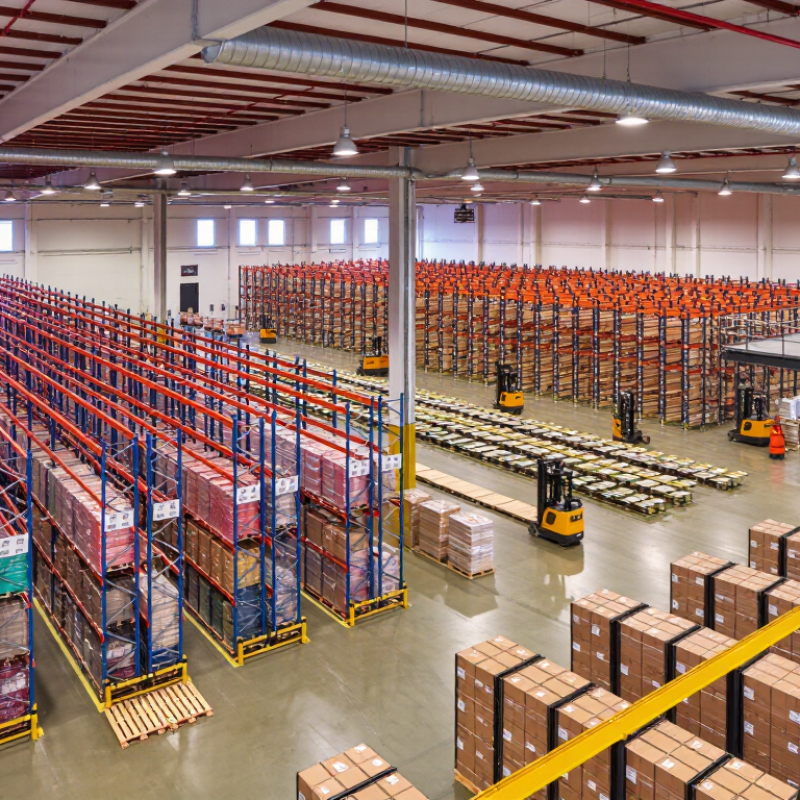
Pallet loads are the starting point for rack design, not an average pulled from a catalog. Record the heaviest unit, pallet dimensions, load overhang, and how weight rests on each beam. A 1,000-kilogram pallet with unevenly placed cartons can load a rack differently from a compact, balanced unit. Include forklift impact assumptions and future changes in product mix. Real warehouses change.
Aisle width should reflect the actual truck, its turning path, and the clearance needed to place pallets safely. OSHA reports an estimated 85 forklift-related fatalities and 34,900 serious injuries each year in the United States; this is a reminder that aisle planning affects people as well as capacity. Verify clearances with the equipment supplier and a site layout, rather than relying on nominal aisle dimensions. ANSI/RMI MH16.1 sets structural design and testing criteria for industrial steel storage racks, including loads and stability. It does not replace a site-specific review of floor conditions, seismic forces, or installation details. One overlooked anchor or slab assumption can undermine an otherwise careful design. Specification sheets are useful, but field measurements often reveal the awkward corner.
| Racking System | Typical Application | Illustrative Pallet Load | Planning Aisle Width | Key Design Inputs |
|---|---|---|---|---|
| Selective Pallet Rack | Direct access to each pallet; suited to varied SKUs and frequent picking. | 1,000–2,500 lb per pallet position | 10–12 ft for many counterbalance-truck layouts | Pallet dimensions, beam spacing, lift-truck turning envelope, rack height, slab capacity, and required flue spaces. |
| Double-Deep Rack | Higher storage density where some pallets can be stored two positions deep. | 1,000–2,500 lb per pallet position | 10–12 ft, depending on truck and layout | Reach-truck capability, load depth, product rotation, pallet overhang, and access to rear pallet positions. |
| Very Narrow Aisle (VNA) Rack | High-density, high-bay storage with specialized guided or turret trucks. | 1,000–2,500 lb per pallet position | About 5.5–7.5 ft; verify with the selected truck | Truck guidance method, floor flatness and levelness, rack height, aisle-end clearances, and building tolerances. |
| Drive-In Rack | High-density storage for multiple pallets of the same SKU, often managed by lot. | 1,000–2,500 lb per pallet position | Typically 11–12 ft for truck entry; confirm equipment needs | Lane depth, pallet quality, load sequencing, upright protection, truck clearance, and last-in/first-out inventory behavior. |
| Drive-Through Rack | High-density lanes accessible from both ends, allowing first-in/first-out operation. | 1,000–2,500 lb per pallet position | Typically 11–12 ft at each operating face | Through-traffic layout, lane depth, load sequencing, pallet consistency, clearances, and inventory rotation requirements. |
| Push-Back Rack | Multiple pallets stored deep on inclined carts, with access from one aisle. | 1,000–2,500 lb per pallet position | Typically 11–12 ft; confirm truck turning and load handling | Cart and rail capacity, pallet dimensions, lane depth, load sequence, product compatibility, and operating clearances. |
| Pallet Flow Rack | Gravity-fed lanes for high-throughput first-in/first-out picking or replenishment. | 1,000–2,500 lb per pallet position | Typically 11–12 ft at operating faces | Pallet condition and friction, lane length, roller or wheel selection, speed control, load sequence, and replenishment access. |
| Mobile Pallet Rack | Rack rows move on powered bases to open an access aisle when needed. | 1,000–2,500 lb per pallet position | One active aisle is opened as needed; operating aisle is set by the truck | Floor and rail design, total moving mass, controls and safety systems, seismic requirements, and access frequency. |
| Cantilever Rack | Long, bulky, or irregular goods such as pipe, lumber, and sheet materials. | Design by arm and column load; not a standard pallet-position rating | Often 10–12 ft for forklift handling; verify load length and truck | Load length, weight distribution, arm spacing, overhang, column bracing, handling equipment, and impact protection. |
| Pallet Rack with Work Platform | Multi-level storage or picking where a designed platform provides access above or between rack levels. | Rack and platform loads must be calculated separately | Set by the lift truck, pedestrian routes, and platform access layout | Platform live and dead loads, stair and guardrail layout, egress, rack stability, floor loading, and applicable building codes. |
Planning note: Load and aisle figures are illustrative planning ranges, not rated capacities or design specifications. Confirm actual palletized loads, handling equipment, clearances, slab conditions, seismic and other site-specific criteria. Rack design and anchorage should be verified by a qualified engineer in accordance with the applicable edition of ANSI/RMI MH16.1 and local requirements.
Selective racks provide direct access to every pallet. Double-deep racks store two pallets behind each other, increasing density.
They suit warehouses with many product types and frequent picking. A forklift can reach a specific pallet without moving another load.
Check pallet consistency, stock movement, and lift-truck capabilities. Rear pallets require moving the front pallet first. Plan carefully.
Measure aisle widths, clear heights, and turning space. Check for columns, sprinklers, and uneven floors. Paper plans can miss details.
They move on guided bases, reducing the need for fixed aisles. Operators open only the aisle they need. Access may feel slower.
Review floor capacity, floor tolerances, fire protection, and emergency access. Also consider how often teams need to reach stored goods.
They work well for long items such as timber, tubing, and sheet material. Open fronts help with loading, while adjustable arms fit different lengths.
Measure real loads and travel times, then test one zone. Check arm capacity and load balance for long stock. I might still miss something.
Choosing the right Custom Racking system starts with understanding pallet weights and dimensions, handling equipment, aisle width, and applicable rack-design guidance, including ANSI/RMI MH16.1. Selective racks offer direct access to every pallet, while double-deep systems store two pallets deep to increase capacity at the cost of some selectivity. For higher-density storage, drive-in and drive-through racks, push-back systems, and pallet-flow racks each suit different inventory rotation needs: many operate on a last-in, first-out basis, while pallet-flow designs can support first-in, first-out rotation.
Other options address specialized spaces and loads. Mobile racks reduce the number of fixed aisles, cantilever racks accommodate long or bulky materials, and mezzanine or automated storage and retrieval systems can make better use of vertical space. Each design should be evaluated for its operating requirements, load capacity, and safe clearances, including relevant OSHA 1910.176(b) considerations. A careful comparison helps balance storage density, accessibility, workflow, and safety.

 Ebil Metal