Heavy Load Storage is becoming a strategic priority as warehouses handle heavier products, tighter footprints, and faster order cycles. MHI’s 2024 Annual Industry Report identifies technology investment, workforce pressure, and operational resilience as major supply chain concerns. These pressures make storage selection more complex than simply choosing the strongest rack.
This article examines the Top 10 Types of Heavy Load Storage, including selective pallet racking, drive-in systems, cantilever racks, push-back racks, automated storage, and floor-based solutions. Each option changes capacity, accessibility, installation cost, and safety requirements. A steel coil may need a very different solution from packaged machinery or industrial components. The details matter. Beam deflection, slab strength, load distribution, forklift clearance, and seismic conditions can change the final design.
John J. Bartholdi III, co-author of Warehouse & Distribution Science, states, “The objective of a warehouse is to satisfy customer demand at the lowest possible cost.” This principle remains useful for Heavy Load Storage decisions. However, cost alone can mislead. A dense system may save floor space but slow retrieval. An automated design may improve accuracy but require stronger maintenance capabilities. No ranking fits every facility.
Industry guidance from the Occupational Safety and Health Administration and material-handling standards reinforces the need for documented capacities, inspections, and trained operators. Real warehouses are rarely perfect. Measurements can be incomplete, product weights can vary, and future demand is difficult to predict. Therefore, this overview compares practical strengths and weaknesses, helping readers question attractive specifications before committing to a storage system.
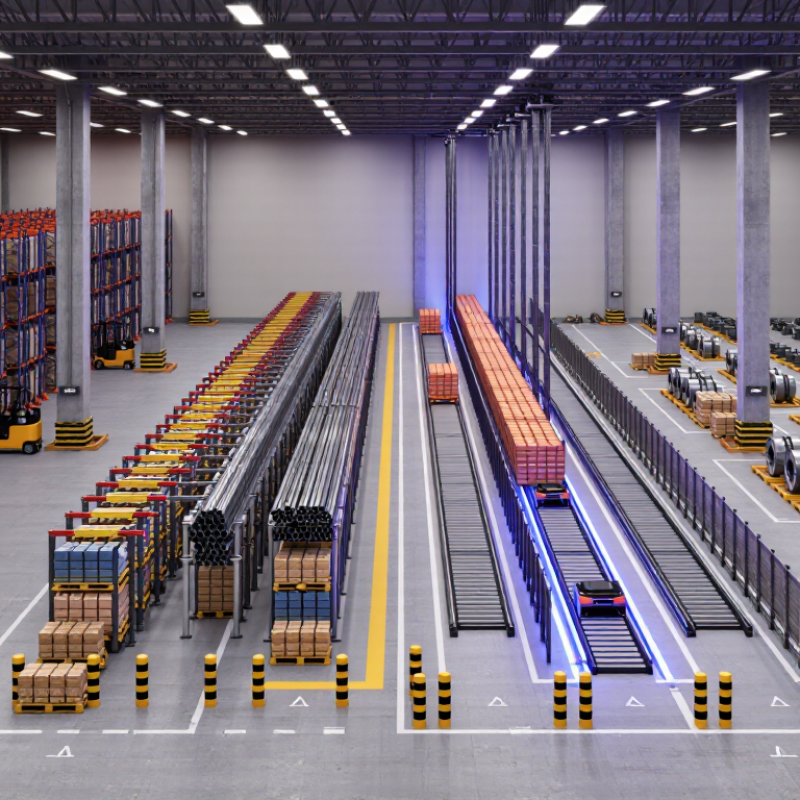
Heavy-load storage is a system for holding dense, heavy goods while keeping them stable and accessible. It can include pallet racks, cantilever racks, reinforced shelving, or floor-level bays. The right choice depends on the goods, handling equipment, and available space. Its purpose is practical: use vertical and floor space efficiently, protect products, and support predictable picking and replenishment. A steel coil, for example, needs different support from a pallet of boxed parts. One layout will not suit every load.
Core requirements start with verified load ratings for beams, frames, shelves, and the floor beneath them. Loads should be distributed as intended, not stacked wherever space appears. A forklift aisle needs enough clearance for the equipment and its turning movements. Keep heavy goods at workable heights when possible. Clear labels help staff check limits quickly. Routine inspections can reveal bent uprights, loose connections, or damaged floor anchors before they become serious problems. Conditions matter, too: moisture, temperature changes, and uneven floors can affect stored goods and equipment. Real warehouses are rarely perfectly square, and neat plans can miss awkward corners. That deserves another look. Have a qualified storage professional assess unusual loads or layouts rather than relying on guesswork.
Heavy-load storage systems are engineered to hold substantial unit loads, such as palletized goods, long materials, or heavy components. The appropriate system depends on the load, handling equipment, access needs, building conditions, and applicable safety requirements.
| Storage Type | How It Works | Typical Applications | Access and Space Characteristics | Core Requirements |
|---|---|---|---|---|
| Selective Pallet Racking | Pallets rest on horizontal beams supported by upright frames. | Warehouses with many product lines and palletized inventory. | Direct access to each pallet; requires operating aisles for lift trucks. | Confirm beam and frame capacities for the specified pallet loads; anchor frames as required and protect exposed uprights. |
| Double-Deep Pallet Racking | Two pallet positions are arranged back-to-back in depth. | Facilities storing multiple pallets of the same product. | Higher storage density than selective racking, but rear pallets have reduced access and typically require a deep-reach truck. | Check reach-truck compatibility, load placement, aisle geometry, and rack capacity for the planned configuration. |
| Drive-In Racking | A lift truck enters a rack lane and places pallets on supported rails. | High-density storage of large quantities of similar products. | Uses fewer aisles; usually operates as last-in, first-out (LIFO). | Plan lane depth and pallet sequence carefully; provide suitable truck clearance, rail protection, and load-impact controls. |
| Drive-Through Racking | Vehicles can enter a lane from one side and exit from the other. | High-volume storage where product rotation or access from both ends is useful. | Supports first-in, first-out (FIFO) operation when loading and retrieval are managed from opposite ends. | Allow through-lane clearance and define traffic rules; verify rail, upright, and floor loads for the designed system. |
| Push-Back Racking | Each pallet pushes the preceding pallet backward on inclined carts or rails. | Multiple pallets per product in operations seeking dense storage with front-side access. | Typically LIFO; offers greater density than selective racking while keeping aisles at the front of each lane. | Use compatible, undamaged pallets; verify cart and lane ratings, pallet dimensions, and safe loading procedures. |
| Pallet Flow Racking | Pallets move by gravity along inclined roller or wheel tracks. | High-throughput inventory with consistent pallet sizes and planned rotation. | Loading and picking occur at opposite ends; commonly supports FIFO and reduces travel within storage lanes. | Check pallet quality and dimensions, lane slope, flow-control devices, and maintenance access for rollers and brakes. |
| Cantilever Racking | Horizontal arms extend from columns to support loads without front uprights. | Long, bulky materials such as pipe, timber, bar stock, and panels. | Open-front design makes long items easier to load and retrieve; systems can be configured for single- or double-sided access. | Match arm length and capacity to the load’s weight and overhang; secure materials against rolling, sliding, or tipping. |
| Mobile Racking | Rack rows move on powered or mechanically assisted bases to open an access aisle where needed. | Sites needing high storage density while retaining access to stored pallets or goods. | Reduces the number of permanently open aisles; access is available at the selected row. | Requires a suitable, level floor, correctly designed rails or base system, movement controls, and safety sensors or interlocks where specified. |
| Heavy-Duty Industrial Shelving | Loads are placed on reinforced shelves, often by hand or with material-handling equipment. | Heavy components, tools, cartons, and items that are not stored on pallets. | Provides accessible shelf-level storage; capacity and span depend on the shelf design and support arrangement. | Distribute loads as specified, secure units where required, and avoid overloading or placing concentrated loads on unsupported areas. |
| Mezzanine Storage Platforms | An elevated structural floor creates additional storage or work space above the existing floor. | Facilities with unused vertical space and suitable building and floor conditions. | Adds usable area without expanding the building footprint; access may use stairs, lifts, or material-handling openings. | Requires structural design for imposed loads, columns and foundations where needed, guarded edges, safe access, and review of fire and building-code requirements. |
Important: There is no single load capacity that applies to a storage type. Capacity depends on the engineered design, materials, dimensions, load distribution, installation, and site conditions. Follow the system’s rated-load information and applicable local codes, and have damaged or altered equipment assessed by a qualified professional.
Classify them by load, access, storage density, and movement. Appearance alone can mislead.
Check pallet weight, dimensions, movement frequency, floor capacity, and forklift clearance. Include packaging weight. Small errors matter.
Selective pallet racking gives forklifts access to each pallet. It needs wider aisles, so it may use more floor space.
Drive-in racks suit large batches of similar goods stored several positions deep. Push-back racks use nested carts, with loading and retrieval from one aisle. Access is less direct.
Inclined rollers move pallets toward the picking face. Pallet size, condition, and rotation plans affect how well the system works.
Cantilever racks hold long goods such as steel bars, timber, or pipe. Heavy-duty shelving suits dense cartons and hand-picked components.
Mobile racks reduce permanent aisles, but opening an aisle takes time. Mezzanines add usable levels, though columns and floor loads need careful planning. It depends.
Have qualified specialists check rack ratings, floor capacity, forklift turning space, and sprinkler clearance. Confirm the layout on site; paper plans can miss a tight turn.
Heavy Load Storage refers to systems designed to hold bulky, dense, or high-weight materials safely and efficiently. Choosing the right solution begins with understanding the load’s size, weight, shape, handling frequency, and storage environment. Systems can be classified by their structure, access method, degree of selectivity, and use of floor or vertical space. Common options include heavy-duty shelving, pallet racks, cantilever racks, drive-in and drive-through racks, push-back racks, pallet-flow systems, mobile racks, mezzanines, and stacking systems.
Each type offers a different balance of capacity, accessibility, safety, and space efficiency. Some provide direct access to individual loads, while others maximize storage density by limiting access to selected items at a time. To select an appropriate system, assess the building layout, equipment used for loading and retrieval, inventory turnover, future needs, and required safety features. A well-matched design can make better use of available space while supporting orderly handling and dependable storage operations.

 Ebil Metal