Choosing among the Top 10 Vertical Storage Systems takes more than comparing machine height or advertised storage density. Buyers need to examine the actual work: how quickly operators retrieve items, whether the system fits the building, and how reliably it connects with existing warehouse software. MHI and Deloitte’s 2024 Annual Industry Report found that 55% of respondents planned to increase investment in supply chain technology. That signals growing interest, but it is not a vertical-storage-specific result. The distinction matters.
Eliyahu M. Goldratt, the operations-management thinker behind the Theory of Constraints, wrote, “An hour lost at a bottleneck is an hour lost for the entire system” in The Goal. His principle offers a useful test for Vertical Storage: does the equipment remove a real picking or space constraint, or simply relocate it? A tray that arrives quickly is less useful if its dimensions do not suit the inventory. A compact footprint also means little if replenishment becomes awkward.
Details decide. Compare load limits, tray sizes, ceiling clearance, aisle access, software integration, service coverage, and operator training. Ask suppliers to demonstrate retrieval using your own item mix, including the slow-moving boxes that rarely appear in polished demos. That sounds practical. It is not always easy. The right system depends on local labor, building conditions, and order patterns; no ranking can replace site-specific checks. This guide compares ten options for global buyers, while leaving room for a less tidy truth: the best fit may not be the most automated one.
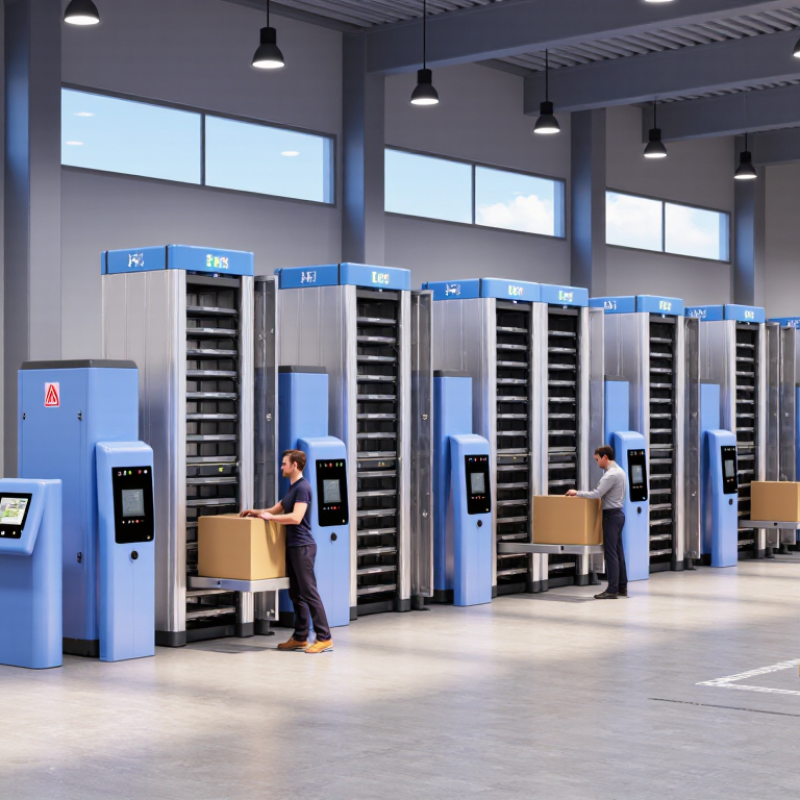
Vertical storage systems use a room’s height to store goods in a smaller floor area. Items sit on shelves or trays inside an enclosed frame. In a vertical lift module, an extractor brings the requested tray to an access opening. A vertical carousel rotates shelves until the selected one reaches the operator. Both systems rely on controls to locate stored items and guide retrieval.
A typical order begins with an item or tray selection on a screen. The system moves the correct storage position to the opening, where a worker picks or replenishes the goods. Sensors can check tray positions and help prevent access while equipment is moving. It sounds simple. In practice, speed depends on item size, order patterns, and how carefully locations are maintained. A tall unit may save floor space, but it cannot fix poor inventory records.
Tips: Measure the tallest and heaviest items before choosing a system. Leave room for the access opening and service work. Review real order data, not just peak estimates. A small pilot can reveal awkward workflows; even a well-planned layout may need adjustment after daily use.
Vertical storage systems rely on more than shelves and motors. Lift modules bring trays to an operator opening, while vertical carousels rotate bins into reach. Shuttle systems move totes through dense rack channels. Each design uses sensors, drives, and control software to coordinate movement and prevent collisions. Clearance matters. MHI’s 2024 Annual Industry Report found that 55% of surveyed supply-chain professionals expected robotics and automation to be adopted within five years. That signals interest, not a guarantee of savings; throughput depends on inventory patterns and order peaks.
Software determines how well the hardware performs. A warehouse management system tracks stock, while a warehouse execution layer can sequence retrievals and balance workloads. Photoelectric sensors detect tray positions; barcode or RFID scans help confirm item identity. Interact Analysis forecast warehouse automation revenues would reach $41.5 billion by 2027, reflecting investment beyond storage equipment alone. Yet forecasts rarely capture every site constraint. A narrow aisle, uneven floor, or awkwardly shaped goods can disrupt a polished simulation. Test with real order data, and leave room for manual recovery when a sensor misreads a tote.
A practical comparison of common vertical storage system types, their operating technologies, suitable inventory, and key selection considerations. Ranking is indicative; the best fit depends on the application and site requirements.
| Rank | System Type | Key Technologies | Storage and Retrieval Principle | Best Suited For | Key Selection Considerations |
|---|---|---|---|---|---|
| 1 | Vertical Lift Module (VLM) | Two vertical tray columns, an automatic extractor, operator access opening, inventory controls, and optional height detection. | The extractor retrieves a tray from a column and delivers it to an access opening at an ergonomic working height. | Small parts, tools, components, and mixed-SKU inventory requiring secure, space-efficient storage. | Check maximum load per tray, total unit height, tray dimensions, access-opening layout, and integration requirements. |
| 2 | Vertical Carousel | Motor-driven carriers, a continuous vertical loop, position controls, and safety interlocks. | Carriers circulate vertically until the requested carrier is presented at the operator opening. | Frequently accessed small items stored in a relatively consistent range of carrier sizes. | Consider carrier capacity, item-size variation, retrieval sequence, ceiling clearance, and the impact of a single access opening. |
| 3 | Vertical Buffer Module | Compact buffer storage, independently controlled carriers or shuttles, sensors, and software-directed sequencing. | Carriers move within a vertical structure to buffer and present totes or trays, often supporting rapid order picking or assembly feeding. | Small, lightweight items and operations with frequent presentation requests or workstation-based picking. | Confirm tote or tray standards, carrier payload, throughput needs, replenishment methods, and system integration scope. |
| 4 | Vertical Pallet Lift System | Vertical lift or elevator, load-handling device, pallet identification, safety controls, and warehouse control software. | Loads are transferred between floor levels and assigned storage positions in a multi-level structure. | Palletized goods where building height can be used to reduce the floor area needed for storage. | Assess pallet dimensions, load weight, lift speed, fire-protection design, building structure, and required transfer areas. |
| 5 | Unit-Load AS/RS with Stacker Cranes | Rail-guided stacker cranes, mast and load-handling devices, rack-mounted locations, barcode or sensor positioning, and warehouse software. | A crane travels along an aisle and vertically stores or retrieves pallet loads from rack positions. | High-bay warehouses handling palletized goods with consistent load formats and a need for controlled inventory tracking. | Evaluate aisle count, rack height, pallet quality, crane redundancy, building tolerances, and planned operating capacity. |
| 6 | Mini-Load AS/RS | Small-load stacker cranes, tote or carton handling devices, position sensors, and automated storage controls. | A crane stores and retrieves totes or cartons from dense rack locations and transfers them to picking or dispatch points. | Cartons, totes, and small cases in distribution, manufacturing, and parts-storage operations. | Check load dimensions and weight, container consistency, access-point capacity, and order-picking workflow. |
| 7 | Shuttle-Based High-Bay AS/RS | Rack-level shuttles, vertical lifts, transfer conveyors, control software, and tote or pallet identification. | Shuttles move loads within storage levels while lifts transfer them between levels and input or output points. | High-density storage with multiple loads per level and a need to scale capacity by adding equipment or storage zones. | Review shuttle and lift capacity, system layout, service access, load compatibility, and recovery plans for equipment downtime. |
| 8 | Automated Paternoster Storage | Motorized continuous-loop shelves or carriers, position controls, access doors, and safety devices. | Carriers circulate around a vertical loop to bring a selected shelf or carrier to a fixed access point. | Small or medium-sized items stored on repeatable shelves where a simple presentation point is suitable. | Consider carrier size, load distribution, item access frequency, guarding, and whether a continuous-loop layout fits the workflow. |
| 9 | Vertical Mobile Shelving | Powered or manually driven mobile bases, rail guidance, aisle controls, and mechanical or electronic safety systems. | Shelving units move to open a shared access aisle, increasing storage density compared with fixed aisles. | Archives, spare parts, records, and other inventory that benefits from dense shelving and does not require continuous automated retrieval. | Check floor loading, rail installation, access frequency, emergency release, aisle safety, and building-floor condition. |
| 10 | Automated Vertical Garment Storage | Overhead or vertical conveyors, hanging-garment carriers, identification tags, sortation controls, and retrieval software. | Garments are stored on carriers or rails and routed to a selected presentation or dispatch point. | Hanging apparel, uniforms, and garment distribution or service operations where items must remain suspended. | Assess garment length, carrier spacing, dust protection, identification accuracy, access points, and handling requirements. |
Vertical storage systems use tall structures to store goods above the floor, helping facilities make better use of limited space. Many designs include shelves, trays, or carriers that move items to an access opening. Some use guided controls to retrieve a selected load. This can reduce walking and simplify picking. The exact benefit depends on item size, weight, and how often it is needed.
Different applications call for different features. A workshop may store tools and spare parts in labeled drawers, while a distribution center may need wider openings for cartons. Manufacturing sites can position frequently used components near workstations. Quiet operation matters in some environments. So does clear access for maintenance. Buyers should check load limits, ceiling height, floor capacity, and aisle clearance before choosing a system.
Automation can improve retrieval consistency, but it does not remove the need for careful organization. Slow-moving stock may not justify a highly automated setup. That is worth considering. Staff also need practical training, and the layout should allow safe loading and servicing. A well-matched system can free floor area and make inventory easier to locate, though poor labeling or unsuitable storage rules can still create delays.
Compare typical storage-unit payloads across vertical storage system types. Values are indicative examples, not universal specifications; actual capacities depend on system design and configuration.
Payload is shown per tray, shelf, tote, or pallet as applicable. Compare systems only alongside their intended load-unit type and application.
Vertical storage systems can reclaim floor space, but capacity figures need careful checking. Ask for usable storage, not just the unit’s outer dimensions. A site survey should record ceiling height, floor condition, aisle width, and the size of stored items. A unit may hold many bins on paper yet leave little room for awkward cartons. Small details matter.
Compare total cost over the expected service life. Include installation, power, software, maintenance, operator training, and any building work. Then compare access speed: a system designed for fast-moving parts may not suit slow, oversized stock. Request a demonstration using representative items and typical order patterns. Supplier estimates are useful, but early estimates can miss site-specific costs. That is worth checking twice.
Tips: Ask for a clear capacity calculation and written assumptions. Confirm floor loading, anchoring, guarding, emergency stops, and safe access with qualified site professionals. Check how faults are reported and how routine inspections are documented. Consider noise and heat, too. They are easy to overlook. Compare safety features alongside cost and throughput, rather than treating them as optional extras.
Vertical storage systems are not one-size-fits-all. A parts distributor with narrow aisles may value an automated vertical lift, while a workshop handling long stock may need a vertical carousel or cantilever arrangement. Measure ceiling height, floor loading, aisle clearance, and item dimensions before comparing equipment. A tall unit helps only when staff can access it safely and replenishment stays practical. Small details matter.
Facility routines also shape the choice. In a busy service center, fast picking and clear inventory records may matter more than maximum storage density. A plant storing heavy tooling needs verified load limits, stable trays, and a planned inspection schedule. Humid markets may call for corrosion-resistant finishes, while dusty sites need accessible cleaning points. Local power quality, maintenance skills, spare-part lead times, and language support also vary. These differences can complicate a good design. No option is perfect.
Tips: Request a site survey, verified load data, and a realistic throughput estimate. Test the proposed layout with actual item sizes and peak-shift demand. Keep a manual recovery plan for outages, and leave room for future changes; forecasts are often wrong.
Lift modules bring trays to an operator opening. Vertical carousels rotate bins into reach. Shuttle systems move totes through dense rack channels. Each design suits different goods and workflows.
Sensors check tray positions and help prevent collisions. Barcode or RFID scans can confirm item identity. Warehouse software tracks stock and sequences retrievals. A misread sensor may still require manual recovery.
Record ceiling height, floor condition, aisle width, and stored-item dimensions. Check floor capacity and available clearance. Awkward cartons can reduce usable storage. Small details matter.
Ask for usable capacity, not only the unit’s outer dimensions. Request written calculations and assumptions. Check whether bins fit actual items, including oversized cartons. Paper capacity can mislead.
Include installation, power, software, maintenance, operator training, and building work. Compare costs over the expected service life. Early estimates may miss site-specific expenses. Worth checking twice.
Confirm load limits, anchoring, guarding, emergency stops, and safe maintenance access. Qualified site professionals should review floor loading. Check fault reporting and inspection records. They are easy to overlook.
Not always. Fast-moving parts may benefit from quick retrieval, while slow-moving stock may not justify a highly automated setup. Test real order data and peak periods. I might be overvaluing speed here.
It can free floor area and reduce walking. Labeled drawers can help workers find tools and spare parts. Staff still need practical training, and poor labeling can cause delays. Organization matters.
This article explains what Vertical Storage systems are and how they use height to organize goods, improve access, and make better use of available floor space. It introduces key technologies such as automated lifting, computerized inventory control, sensors, and safety interlocks, then surveys ten system types and the features that suit different applications, from compact work areas to high-throughput facilities.
For global buyers, selecting a system involves balancing storage capacity, operating and installation costs, access speed, and safety requirements. The article also considers how building layout, inventory characteristics, workforce needs, and local operating conditions can affect the choice. By comparing these factors, buyers can identify a Vertical Storage solution that fits their facility and market while supporting efficient, reliable day-to-day operations.

Ebil Metal