Why Choose Custom Shelving for Your Business?
Every business has different products, workflows, and space limitations. Standard shelving may fit a room, but it rarely fits the way your team works. Custom Shelving can use awkward corners, narrow walls, and full-height areas more effectively. A retail store might need adjustable bays for changing displays. A workshop may require reinforced shelves for tools, parts, and equipment. A stockroom could benefit from clearly labeled sections near the packing station.
Good shelving begins with careful observation. Measure ceiling height, aisle width, door clearance, and floor strength before choosing a design. Experienced storage professionals also consider load ratings, material durability, lighting, cleaning routines, and future growth. These details affect safety and daily efficiency. A well-planned system can reduce unnecessary walking, improve product visibility, and make stock checks less stressful.
It is not a magic fix. Poor measurements can create expensive problems. I have seen businesses prioritize appearance and overlook access, maintenance, or changing inventory. That mistake can make attractive shelving frustrating to use. Reliable suppliers should explain materials, installation methods, warranty coverage, and expected maintenance clearly. Their recommendations should match your operations, not simply promote the most expensive option. When design decisions are tested against real working conditions, Custom Shelving becomes more than furniture. It becomes a practical investment in organization, safety, and long-term business performance. Small details matter. Reconsider the plan before installation.
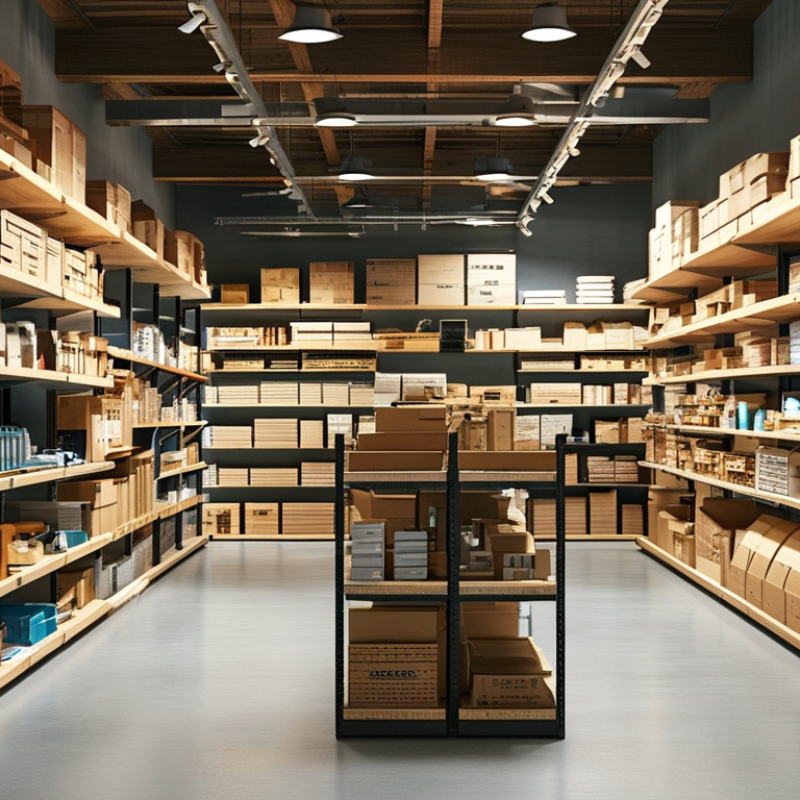
Define Custom Shelving: Fit, Load Capacity, Workflow, and Compliance
Why Choose Custom Shelving for Your Business?
Custom shelving is built around your actual space, stock, and daily workflow. Standard units may leave awkward gaps near doors, columns, or low ceilings. A tailored layout can use those areas more effectively. Measure aisle width, shelf depth, ceiling height, and access points before selecting materials. Small measurement errors can create expensive problems later.
Load capacity also needs careful attention. Record the weight of each product category, including packaging. Place heavier cartons on lower levels to improve stability and reduce lifting risks. Adjustable shelves support changing inventory, but only when frames, beams, and fixings match the expected load.
Compliance matters too. Check applicable workplace safety requirements, fire access rules, and installation guidance. Local requirements may differ.
Tips: Watch staff perform a normal picking task before finalizing the design. Their movement often exposes problems that drawings miss. Leave enough clearance for handling equipment and emergency routes. Label weight limits clearly. A practical review can prevent overloading, blocked walkways, and wasted travel time. Do not assume maximum capacity equals safe everyday capacity. A design can look efficient on paper and still frustrate workers. That is worth reconsidering.
Measure Demand: U.S. E-Commerce Hit $1.19T in 2024 (U.S. Census)
Why Choose Custom Shelving for Your Business?
Measure Demand: U.S. E-Commerce Hit $1.19T in 2024 (U.S. Census)
U.S. retail e-commerce sales reached approximately $1.19 trillion in 2024, according to the U.S. Census Bureau. That figure reflects more than online demand. It signals greater pressure on warehouses, stockrooms, and fulfillment areas to stay organized. Custom shelving helps businesses use available space with greater accuracy. Measurements can account for ceiling height, aisle width, product weight, and daily picking routines.
Space matters. A shelf designed for small parcels should not carry oversized equipment. Adjustable levels can support changing inventory, while reinforced frames help reduce movement and loading risks. Clear locations also shorten search time. In a busy stockroom, saving thirty seconds per order can become meaningful across hundreds of orders. Good planning begins with actual measurements, not assumptions.
The first layout is rarely perfect. Seasonal demand, returns, and new product sizes can expose weaknesses after installation. That is why a practical shelving plan should allow revisions. Track fast-moving items, observe worker movement, and review damaged packaging. These details reveal whether shelves are placed too high, too deep, or too close together. A custom system can respond to those findings instead of forcing every product into one fixed arrangement. It may cost more than standard shelving initially, but wasted space and repeated handling deserve equal attention.
Why Choose Custom Shelving for Your Business? — Measure Demand: U.S. E-Commerce Hit $1.19T in 2024 (U.S. Census)
| Market Dimension |
2023 |
2024 |
Change |
Relevance to Custom Shelving |
| U.S. retail e-commerce sales |
$1.119 trillion |
$1.193 trillion |
+$73.9 billion
+6.6% |
Continued online-sales expansion increases the need for organized inventory storage, picking areas, packing stations, and flexible fulfillment layouts. |
| E-commerce share of total U.S. retail sales |
15.4% |
16.1% |
+0.7 percentage points |
A larger digital sales channel can require more dedicated back-room shelving capacity without using a one-size-fits-all layout. |
| Retail e-commerce sales growth |
Baseline year |
6.6% year over year |
Positive growth |
Modular shelves can help businesses add, remove, or reposition storage as product volume and order activity change. |
| Annual e-commerce sales per month |
$93.2 billion average |
$99.4 billion average |
+$6.2 billion monthly average |
Higher average monthly demand supports space planning based on product velocity, replenishment frequency, and available floor area. |
| Sales channel mix |
Digital and physical retail combined |
Digital sales represented 16.1% of total retail sales |
Digital channel expanded |
Custom shelving can separate e-commerce picking stock from customer-facing or reserve inventory to reduce congestion and improve workflow. |
| Storage flexibility requirement |
Demand varied by product category |
Demand continued to increase |
Greater need for adaptability |
Adjustable shelf heights, configurable bays, and purpose-built dimensions can accommodate different package sizes and inventory profiles. |
|
Source: U.S. Census Bureau, Annual Retail Trade Survey and Quarterly E-Commerce Report. The 2024 annual U.S. retail e-commerce estimate was approximately $1.193 trillion, representing about 16.1% of total retail sales. Figures are rounded.
|
Engineer Capacity with ANSI/RMI MH16.1 Load-Rating Principles
Custom shelving gives a business more than extra storage. It lets engineers match each bay to the products, aisle width, and handling equipment used daily. A small-parts area may need shallow shelves, while boxed inventory may require deeper levels and stronger beams.
ANSI/RMI MH16.1 load-rating principles help turn these choices into measurable capacity. Engineers review upright frames, beam spans, connection details, and expected loads. Capacity depends on the complete configuration, not one component alone. A rack rated for one arrangement may perform differently after adding levels or changing beam positions. Clear labels should show permissible loads by level and bay. They should be easy to read from the aisle.
Site conditions matter too. Concrete strength, floor flatness, anchors, impacts, and seismic demands can affect the design. A qualified professional should verify these conditions and keep calculation records. A warehouse may look orderly, yet hidden overloads can develop when fast-moving cartons are placed on the wrong level.
There is room for honest review. Real operations rarely stay unchanged. New products arrive, forklifts change, and storage habits drift. A capacity plan should be checked after those changes. One overlooked detail, such as concentrated weight near a shelf edge, can challenge an otherwise sound design. Careful inspection and documented adjustments make custom shelving safer, more useful, and easier to manage.
Design Safer Access Using NIOSH’s 51-lb Recommended Weight Limit
Why Choose Custom Shelving for Your Business?
A safer storage plan begins with the worker, not the shelf. NIOSH’s 51-pound recommended weight limit offers a useful reference for certain lifting conditions. It is not a universal rule for every task. Reach distance, lifting frequency, grip quality, and body position can change the risk. Custom shelving helps place heavy items between knee and shoulder height. It can also divide bulky materials into smaller containers. Less strain matters.
Consider a busy stockroom with cartons, tools, or packaged supplies. A deep shelf may force employees to twist or stretch. A narrow, adjustable design keeps frequently used items within comfortable reach. Lower shelves can store lighter goods. Heavier products belong closer to the worker’s centerline. Clear labels and open access reduce rushed handling. Small details help.
Measure real work patterns before ordering. Watch how employees lift, turn, and carry items during a normal shift. Ask what feels awkward. Then adjust shelf height, depth, spacing, and load distribution. A 51-pound box may still be unsafe when lifted from the floor repeatedly. This is where planning can fall short. We may focus on shelf capacity and overlook human movement. Review the layout after installation, because practical experience often reveals problems that drawings miss. Safety improves through observation, training, and steady adjustments.
Why Choose Custom Shelving for Your Business?
Design safer access using NIOSH’s 51-lb recommended weight limit. The chart shows how selected single handling factors can reduce the recommended weight limit (RWL) from the 51-lb load constant. Each scenario assumes all other NIOSH lifting-equation multipliers equal 1.0.
Practical takeaway: Custom shelving can help keep frequently handled items closer to the worker, reduce twisting, and limit excessive vertical travel. These improvements support safer access, but the NIOSH Revised Lifting Equation should be applied to the specific task and worker conditions.
Verify ROI with Space Use, Pick Rates, Labor, and Error-Cost Metrics
Why Choose Custom Shelving for Your Business?
Custom shelving should earn its place through measurable results, not appearance. Start with a four-week baseline. Record cubic space utilization, average travel distance, lines picked per labor hour, and labor hours per order. WERC’s 2024 DC Measures report places strong order-picking accuracy near 99.9%, but small errors still create expensive rework. Track each mistake separately. Include reshipping, returns, customer credits, disposal, and administrative time. A 0.2% error rate can become significant when daily volume reaches thousands of order lines.
A practical shelving design should place fast-moving items between knee and shoulder height. It should also reduce awkward reaches and unnecessary walking. Compare the current layout with a pilot zone. Measure pick rates, replenishment time, overtime, and damaged inventory. The U.S. Bureau of Labor Statistics reports that compensation costs include substantial benefits beyond wages, so labor savings should use the full hourly cost. One assumption often fails. More storage density can slow picking if access becomes difficult. Calculate payback using verified monthly savings, not projected capacity alone. Review the figures after peak season. The first result may look promising, yet seasonal demand can distort it.
FAQS
It adapts to ceiling height, aisle width, product size, access points, and picking movements. Standard units may leave gaps near doors or columns. Measure carefully. Small errors become expensive.
Record each product’s weight, including packaging. Place heavier cartons on lower shelves for better stability. Frames, beams, and fixings must match the expected load. Maximum capacity is not always safe daily capacity.
Keep heavier items between knee and shoulder height when possible. This reduces bending, twisting, and awkward reaching. A 51-pound box may still be unsafe after repeated floor lifts. Human movement matters.
Watch employees lift, turn, and carry items during normal work. Adjust shelf height, depth, and spacing around real movements. Ask what feels awkward. Drawings can miss problems.
Use shallow, accessible shelves for frequently picked products. Deep shelves may force workers to stretch or twist. Store bulky materials in smaller containers when practical. Less strain helps.
Yes, adjustable levels can handle changing product sizes and seasonal demand. The structure must still match the expected load. Review shelf positions after returns, new products, or demand changes. Plans age.
Check applicable workplace safety requirements, fire access rules, and installation guidance. Keep emergency routes and handling areas clear. Local requirements may differ. Compliance is not automatic.
Track fast-moving items, picking time, damaged packaging, and blocked walkways. Saving thirty seconds per order can matter across hundreds of orders. Review the layout after installation. The first version may be wrong.
It may reduce wasted space, repeated handling, and unnecessary travel. Compare installation cost with long-term workflow losses. A layout can look efficient on paper yet frustrate workers. That deserves reconsideration.
Conclusion
Custom Shelving gives businesses a practical way to organize inventory around their actual space, products, and daily workflow. Unlike standard shelving, it can be tailored to available floor height, aisle width, storage demand, item dimensions, and required load capacity. As U.S. e-commerce reached approximately $1.19 trillion in 2024, efficient storage has become increasingly important for handling higher order volumes without sacrificing accessibility or accuracy.
A well-designed system should use recognized load-rating principles, such as those outlined in ANSI/RMI MH16.1, to support safe and reliable capacity planning. It should also promote safer access by considering ergonomic guidance, including NIOSH’s recommended 51-pound weight limit for lifting tasks. To confirm the investment, businesses can measure space utilization, picking rates, labor hours, order accuracy, and costs related to errors or product damage. These metrics help demonstrate whether Custom Shelving improves productivity, reduces operational waste, and creates a safer, more scalable storage environment.

 Ebil Metal